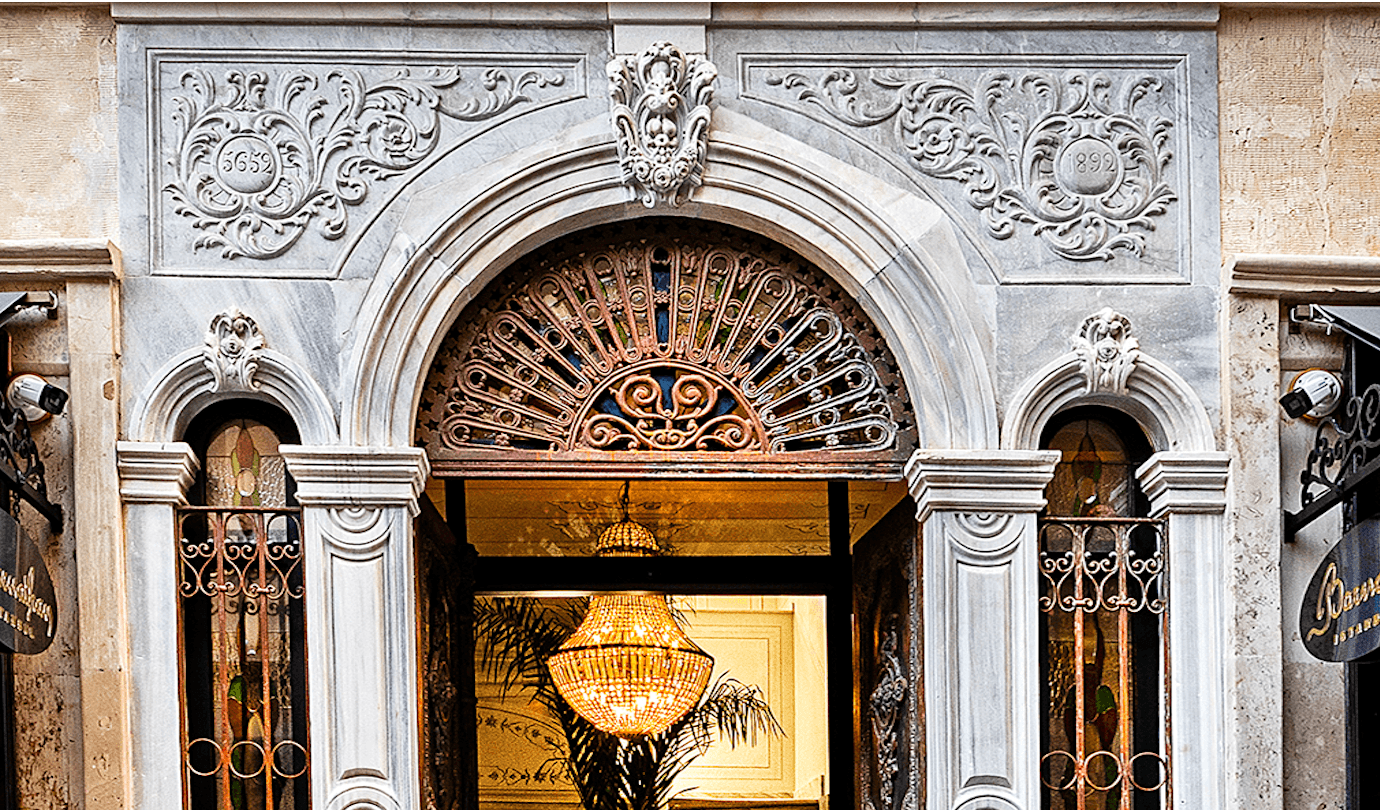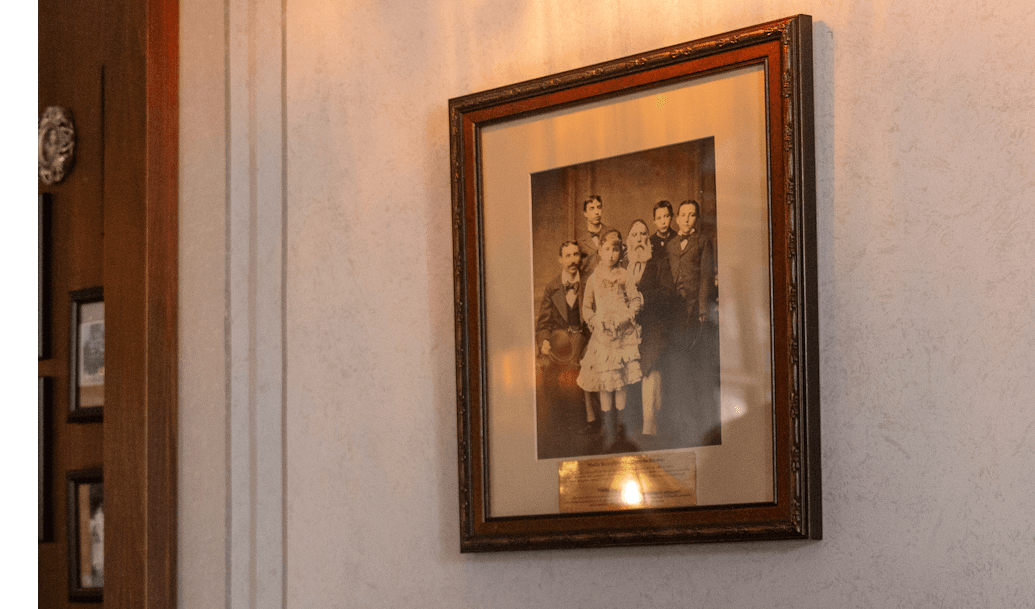
Today, you can wander freely through Galata, turn down any street you wish, and head out for coffee late at night. Yet just a century and a half ago, this was impossible: Galata was enclosed by walls, and its gates were closed at night. Our hotel's name — La Porta, meaning "the gate" — comes from this history. And the best part is that traces of it can still be seen, including from our hotel's rooftop.
A district whose gates closed at night
The walls dating from the Genoese era formed a real boundary around Galata. The area within the tower and walls was known as Galata, while the upper section was called Pera; passage between these two worlds was provided through these gates. This arrangement lasted far longer than one might think: even in 1853, the city gates were closed at night, just as they had been in the Genoese period. In those years, it was also forbidden to walk the streets after sunset without carrying a lantern.
In other words, a "gate" in Galata was not merely an architectural detail; it was an institution that set the rhythm of daily life. When the gate was open, the city was open; when it was closed, the day was over.
Why were the walls demolished?
In the second half of the nineteenth century, Galata and Pera needed to be connected and the district integrated into the growing city. Municipal reforms lit the streets, opened new roads, carved the Tünel through the hill — and the historic walls paid the price for these projects. Demolishing the walls would both integrate the area with the rest of the city and generate income through the sale of newly opened land.
What remains? First, the names: street names such as Büyük Hendek, Küçük Hendek and Lüleci Hendek preserve the memory of the walls' moats. Then there are the stones: remnants of walls and small towers, mostly in ruins, scattered throughout the district. And there is Yanıkkapı, with its seven-century-old inscription — the last surviving gate, from which our brand also takes its name.
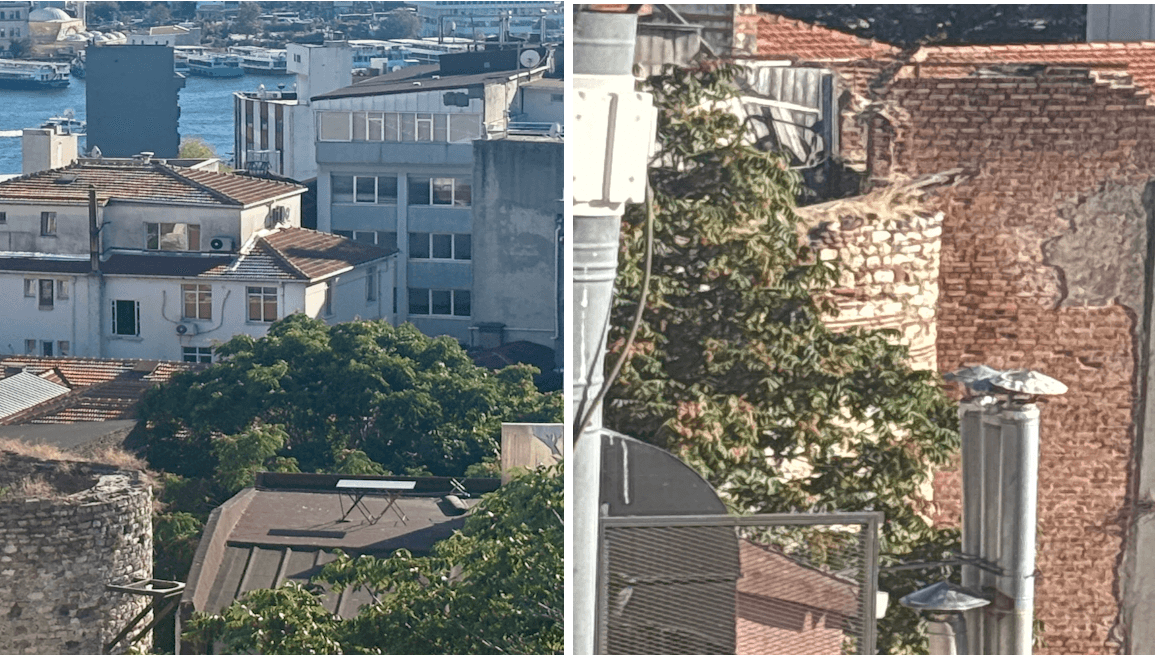
Today, Galata brings a single tower to mind; yet many towers once protected the city along its walls. Only three have survived to the present day: a house was built atop one, while another housed an iron workshop for many years. The small tower ruins visible from La Porta's terrace are traces of this defensive network that once encircled the entire district.
History seen from the rooftop
This is where La Porta's most distinctive feature begins. From the terrace on the hotel's top floor, Galata Tower and the Golden Horn appear in the same frame — two icons of Istanbul in a single glance. But observant guests notice a third element: small tower and wall remnants, standing in ruins within the view.
This is an unusual privilege. Most views show you the city as it is today; this one reveals its layers all at once: the remains of fourteenth-century defensive structures, the tower erected alongside the Genoese walls in 1348, and the waters of the Golden Horn beyond. As you sip your morning coffee, you are in fact reading Galata's seven-century-old plan.
Breakfast in the heart of this view
For guests staying at La Porta, breakfast is served on this very rooftop, at La Porta Roof: an open buffet every morning from 07.00 to 10.30. In the day's first hours, light falls across the tower from the side, ferries begin to pass as the Golden Horn remains quiet, and the district slowly wakes. Breakfast overlooking ruins may sound ambitious, but in Galata, history is simply part of everyday life — blending into the view from your breakfast table.
What is more, the terrace is not limited to breakfast hours: it is open to our guests throughout the day. This means you can experience the view in three distinct moods. In the morning, light arrives from the east and the tower stands in sharp relief; in the afternoon, the Golden Horn glimmers, making it the quietest time to rest your feet after sightseeing; at sunset, the light softens, shadows from the ruins lengthen, and the city turns orange. We recommend coming upstairs about half an hour before sunset — it is when Galata is at its most generous.
Entering through the gate
There is something lovely about staying in a hotel named after a gate: in a district whose gates once closed at night, the doors are now always open to you. Walk, get lost, return late at night — the walls came down long ago.
Source: "Barnathan Apartments" (Çiğdem Oğuz, Nar Yatırım, 2016) and the Meroddi brand archive.