When staying in a historic building, we rarely stop to consider that it did not simply appear there on its own. Yet behind every restored structure standing in Galata lies a story of years, permits, master craftspeople and stubborn patience. Barnathan’s took ten years.
Starting from ruins
When the Barnathan Apartments were completed in 1892 and 1893, they were among Galata’s most ambitious buildings. But the twentieth century was not kind to them: owners changed, the name changed, apartments became workplaces, and the lower floors filled with carpentry and stationery workshops. By the time we took it over, the building was largely in ruins.
Bringing a structure like this back is far more than what the word “renovation” suggests. In a century-old building, every intervention is subject to the approval of preservation boards; discovering what the original materials were is an investigation in itself; and as each layer is removed, there is no knowing what may lie beneath. The process took much longer than we had planned — around ten years.
Twenty-two craftspeople, fourteen months: hand-painted decorative work
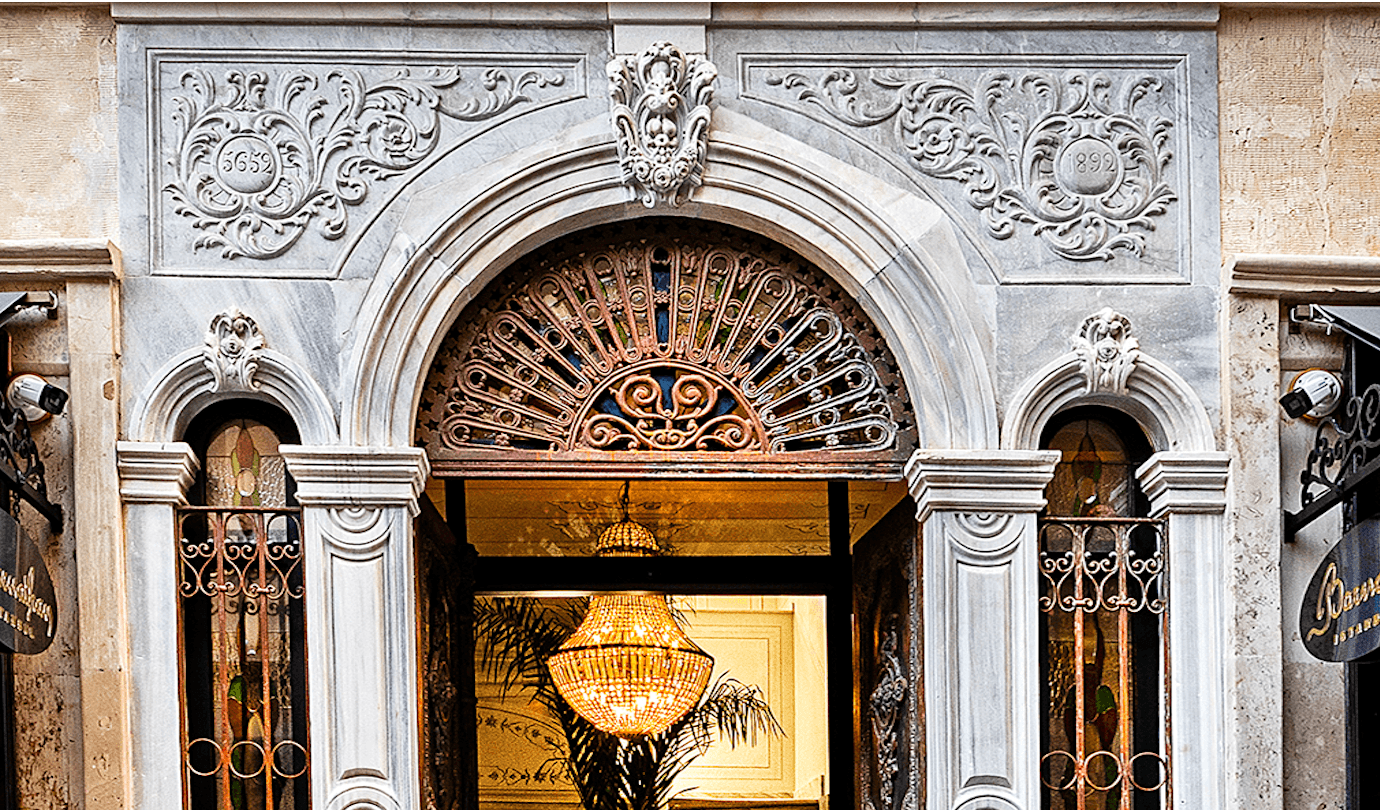
The building’s most demanding task was the hand-painted decorative work covering its surfaces from top to bottom. This is a craft that cannot be done by machine: motifs are applied by hand, layer by layer, with patience. Twenty-two people worked for fourteen months on restoring Barnathan’s decorative paintings.
Consider that number: for nearly a year and a half, every day, more than twenty craftspeople worked solely on wall and ceiling ornamentation. Every flourish you see in the rooms and on the stair landings today passed through a human hand and brush.
What emerged from beneath the floors
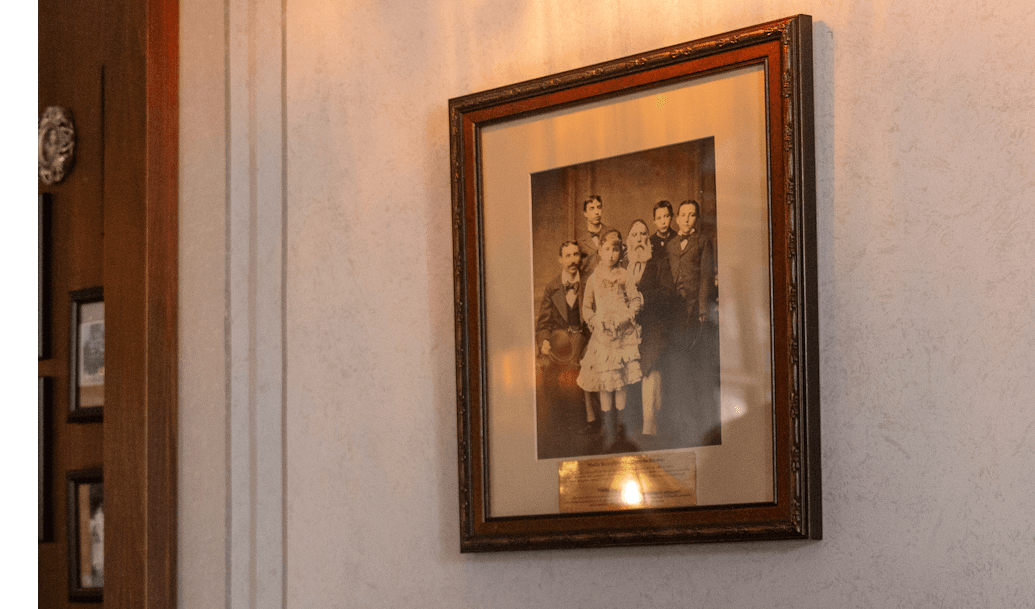
The restoration’s most unexpected moment came during dismantling, when old photographs emerged from beneath the floorboards and from hidden corners. Snapshots left behind by people who had lived in the building — waiting for years beneath the boards, in a place no one knew about.
It would not have been right to store these photographs away in a box. On our entrance floor, we created a small album to commemorate the Barnathan family, who built the building; its architect, Charles Maruletto; and the other families who lived here. There is another surprise at the entrance: the original building plan, hand-drawn on silk fabric — a document preserved by the family’s descendants for generations before reaching us.
What does the building do today?
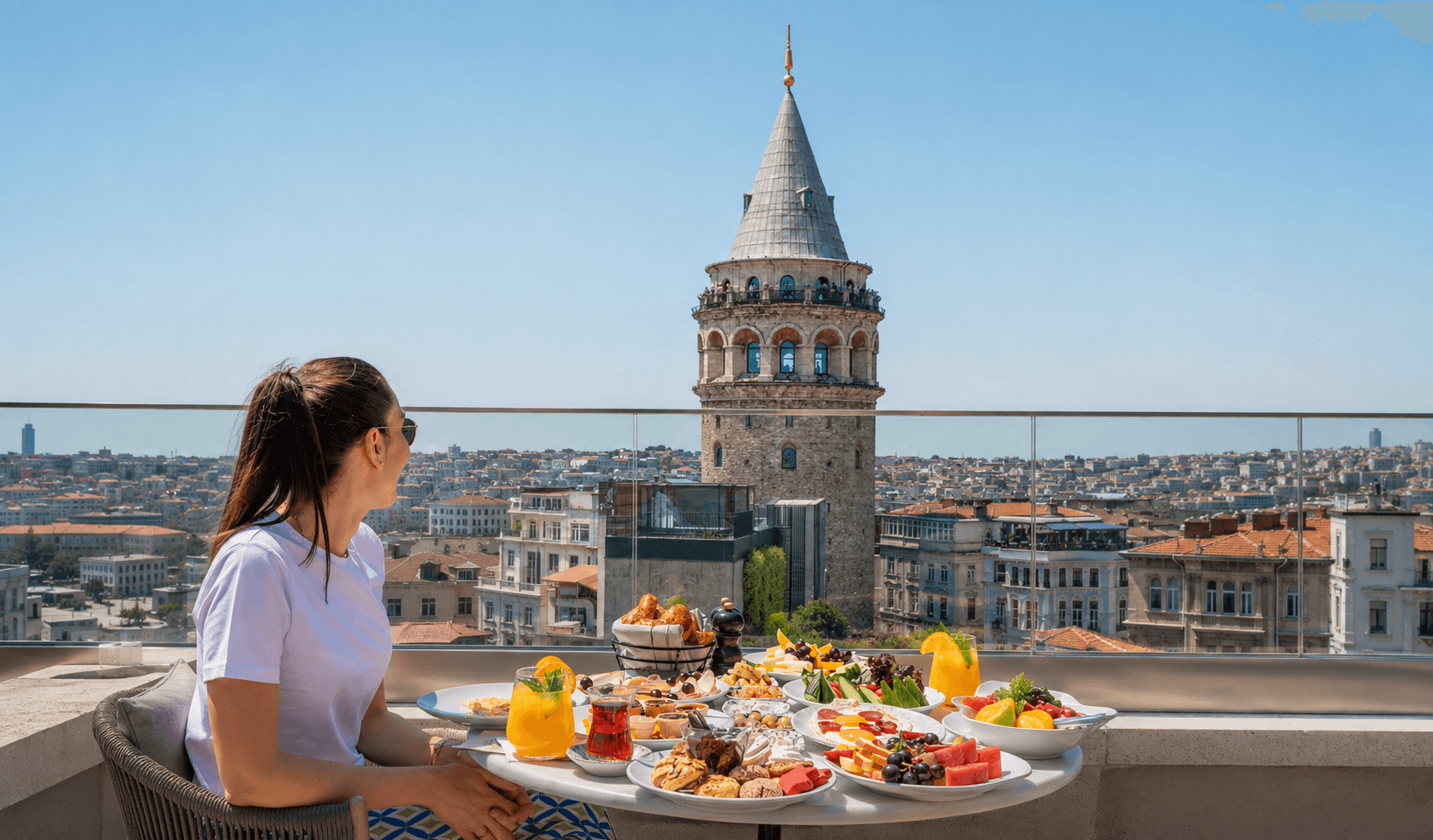
Today, Barnathan is a layered destination: Barnathan Garden on the ground floor, with its garden overlooking Galata Tower; accommodation on the upper floors; and Barnathan Roof at the top, with views encompassing the Bosphorus, the Golden Horn, the tower and the historic peninsula. In other words, the building functions once again as it once did — a Galata apartment building with life upstairs and a ground floor open to the neighbourhood.
The queue
On opening night, a queue formed in front of the door. The weariness of ten years of effort vanished at once for everyone who saw it.
Restoring a building does not end with repairing its stone; it ends with bringing it back into the life of the city. Each day, as people enter and leave through Barnathan’s door, the building truly comes back to life.
Source: Meroddi archive and “Barnathan Apartments” (Çiğdem Oğuz, Nar Yatırım, 2016).