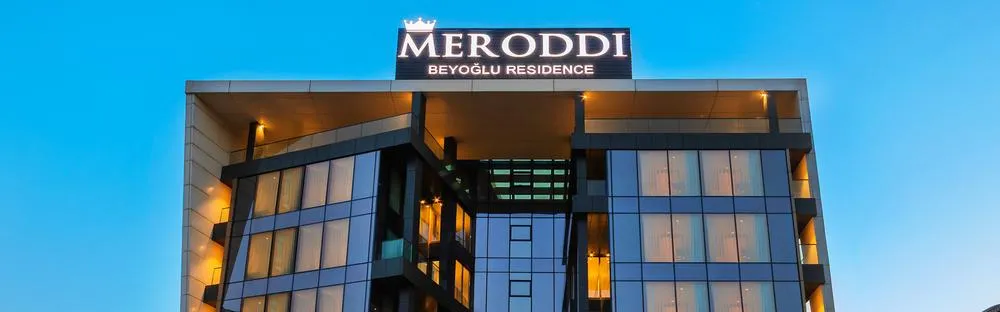
When you sleep in a room at Meroddi Barnathan, a train that has been making the same journey for more than a century passes several floors beneath your feet. This is neither an urban legend nor a marketing line: the Tünel, the world’s second-oldest underground railway after London, has operated directly beneath our building since 1875. Better still, the metro does not pass beneath the hotel; the hotel was built above the metro.
A city within the walls, two lives at either end of the hill
To understand the story, one must return to Galata in the mid-19th century. Galata and Pera, which we now explore as though they were a single neighbourhood, were then two separate worlds. The Genoese-era walls still stood, and even in 1853, the city gates were closed at night just as they had been five centuries earlier. After sunset, it was forbidden to go out into the streets without a lantern.
Below, around the harbour, lay Galata: bankers, merchants, sailors, and goods arriving from every corner of the world. Above, on the hill, was Pera: embassies, arcades, and European-style shopfronts. Between them stretched a steep, exhausting slope—a route climbed and descended each day by thousands travelling to work, home, and the harbour, turning to mud in the rain.
An idea from a French engineer
French engineer Eugène Henri Gavand arrived in Istanbul in 1867 and saw both this tide of people and the ordeal of the hill. His solution was radical: a railway running through the hill, underground. Gavand developed the project until 1872, succeeded in persuading Sultan Abdülaziz, and founded a company whose name still brings a smile today: The Metropolitan Railway of Constantinople, from Galata to Pera.
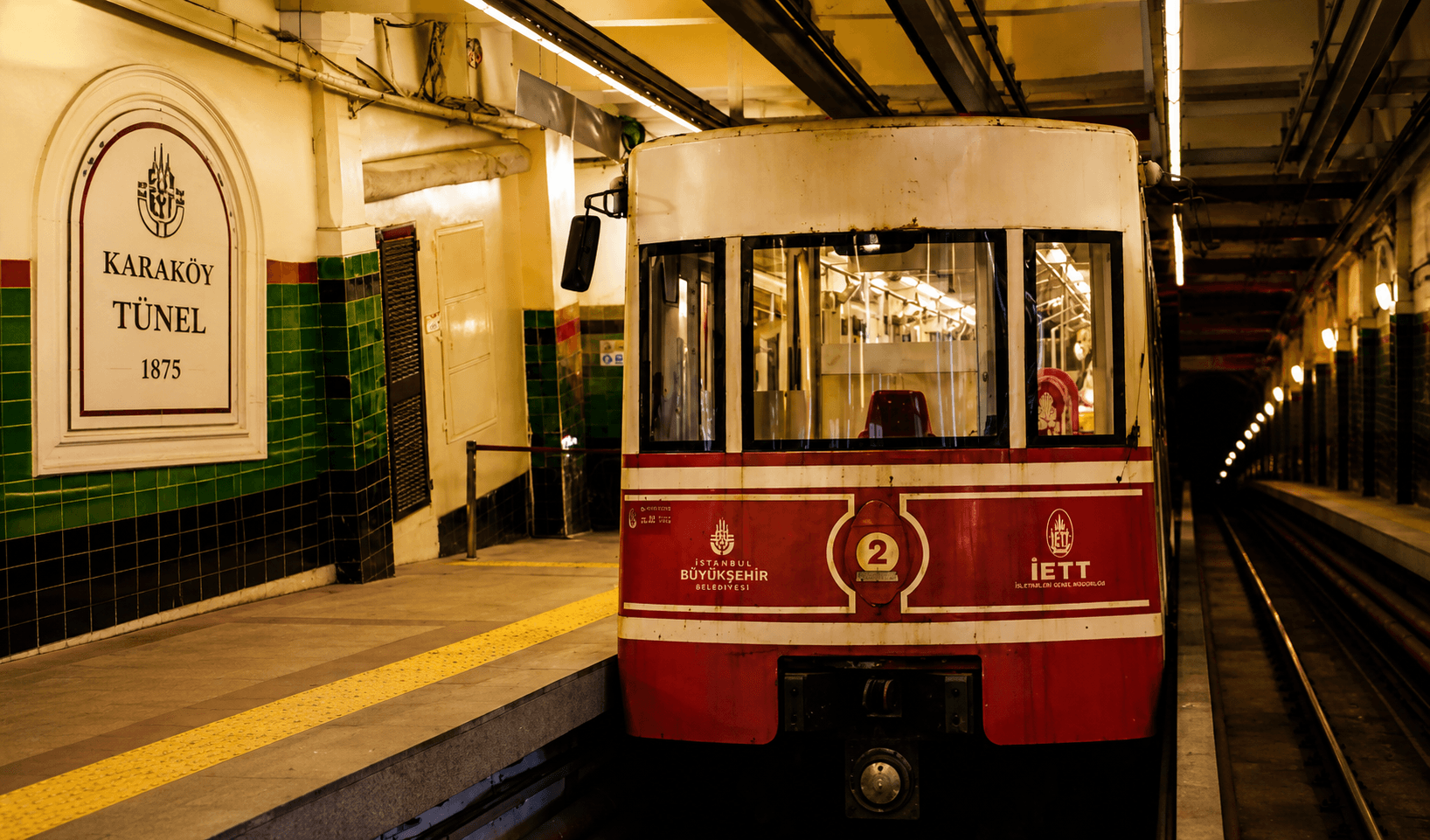
The Tünel entered service on 17 January 1875. Only twelve years after the London Underground—and before Paris, New York, and Budapest. The Ottoman capital had become the world’s second city to carry passengers underground. The line was only 573 metres long, yet the idea it carried was far greater: a city did not have to surrender to its own geography.
Yet Eugène Henri Gavand, the engineer who devoted years to the project, was not among the guests at the opening ceremony. The people behind ideas that transform cities are not always the ones cutting the ribbon.
First came the Tünel, then Barnathan
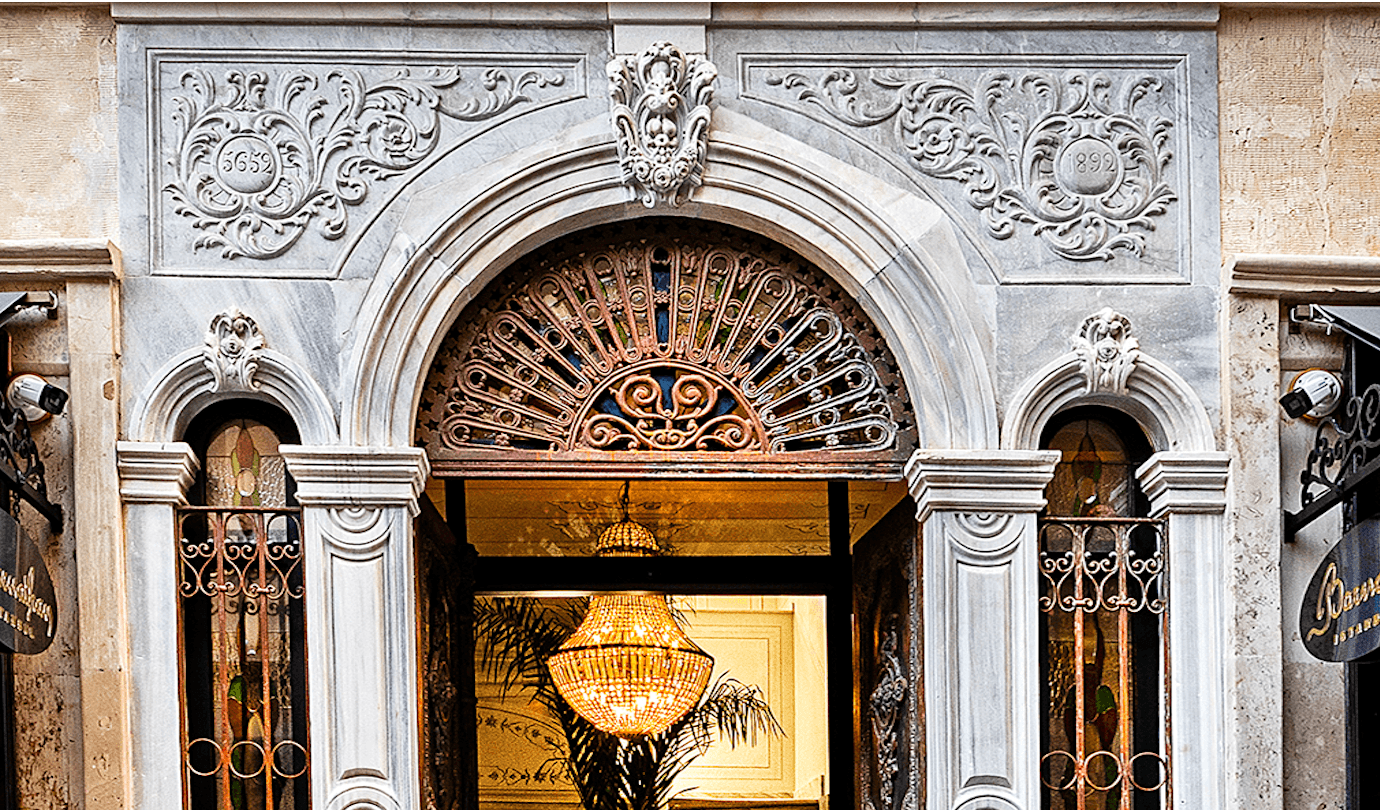
Now for the part of the story that concerns us. When the Tünel opened, the Barnathan Apartments did not yet stand on the slope above it. In this new era for Galata—growing wealthier, more crowded, and freed from its walls—the concept of apartment living was only beginning to arrive in the city. The Barnathan family commissioned their grand rental apartment building, with its two blocks completed in 1892 and 1893, at the heart of this transformation—inscribing dates in both the Gregorian and Jewish calendars on the stones at their entrances.
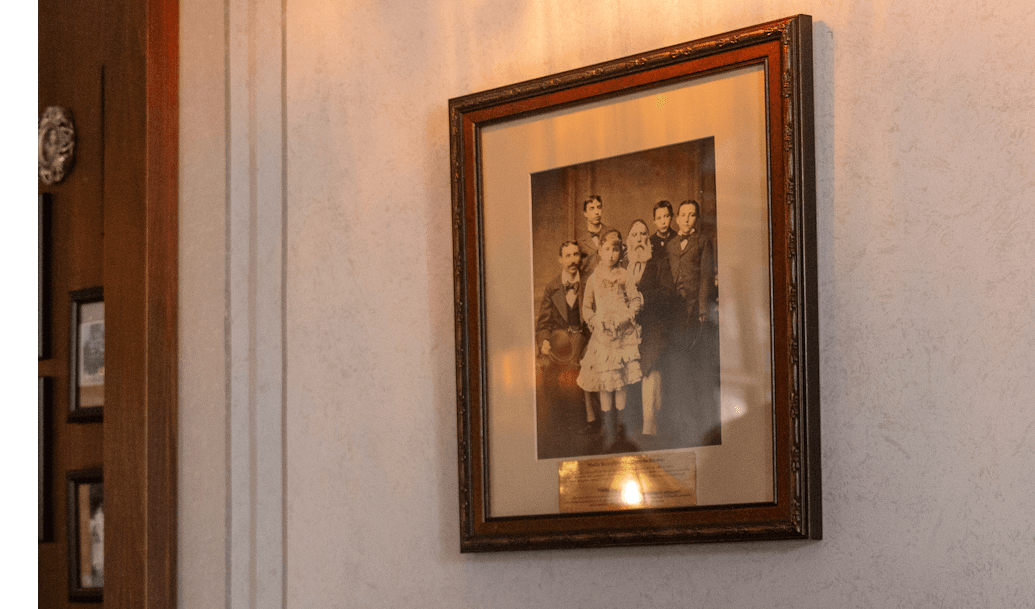
The sequence, then, is simple: first the train below ground, then the building above it. Barnathan’s first residents—doctors, Ottoman Bank employees, and Oriental Railway officials—enjoyed from day one the privilege we would now call “a location right next to the metro.” One hundred and thirty years have passed; the train still follows the same route, and the building still stands in the same place.
If you would like to try it today
The Tünel still operates between Karaköy and Beyoğlu today, and the journey takes only a few minutes. Step out of Meroddi Barnathan and reach the upper station within moments; take the world’s shortest and second-oldest underground railway down to Karaköy, then walk on to Galata Bridge. For those who would rather not climb the hill on the way back, the same train has continued doing its job for one hundred and fifty years.
And when you return to your room at night, falling asleep knowing that the final train is passing deep below offers a quiet privilege unlike anything any other hotel in Istanbul can provide.
The historical information in this article was compiled from the book "Barnathan Apartmanları" (Çiğdem Oğuz, 2016), published with the contribution of Nar Yatırım. If you would like to discover the building’s full story, you may visit our Meroddi Barnathan page or browse the book itself at our reception.