Today, New Year's Eve in Istanbul means the lights of Beyoğlu, a midnight countdown and tables that stay full until morning. Yet celebrating 1 January as the start of the year is a habit of only about a century in this city. It first took root in the streets of Galata and Pera, in the ballrooms of the embassies and on a warship anchored in the Golden Horn. Here is a short history of New Year's Eve in Istanbul, from the Ottoman Empire to the Republic.
The Ottomans had more than one New Year
Ottoman Istanbul did not run on a single calendar. For Muslims, the year began with the month of Muharram in the Islamic (hijri) calendar. The state's fiscal year turned in March, following the Rumi calendar, an Ottoman version of the Julian calendar. The city's Christian and Jewish residents kept calendars of their own. For most Ottomans, 1 January was just an ordinary winter day.
Two New Years in Galata and Pera
The first place in Istanbul to celebrate New Year's Eve was Galata and Pera, today's Beyoğlu, where European merchants, Levantines, Greeks and Armenians lived. Catholics welcomed the new year on 1 January, while Orthodox Christians, who kept the old Julian calendar, celebrated 12 or 13 days later. So Pera celebrated New Year twice. Muslim Istanbulites joined these nights as neighbours. In "Evvelki Yılbaşılar" (New Years of the Past), written in 1926, the writer Ahmet Rasim remembered them like this: "We would invite ourselves to Galata, to Beyoğlu, in short to every community that kept the Orthodox calendar, and make merry until morning." We tell the story of Galata's many languages in How Galata became cosmopolitan.
1829: a ball on a ship in the Golden Horn
Ottoman statesmen's first official encounter with New Year's Eve took place in 1829, on a British warship anchored in the Golden Horn. The British ambassador, Sir Robert Gordon, gave a grand ball aboard the frigate Blonde, and Ottoman dignitaries attended with the Sultan's permission. Sources remember that night as the first New Year celebration attended by members of the Ottoman government.
From embassy ballrooms to the palace
In the decades that followed, the culture of the Western ball grew in the embassy palaces of Pera. In February 1856, in the last days of the Crimean War, Sultan Abdülmecid attended a ball at the British embassy and, a few days later, one at the French embassy. No Ottoman sultan had ever been seen at an embassy ball before. These were not New Year balls, but they showed that European-style celebrations had been accepted at court.
The occupation years: midnight and ships' horns
New Year's Eve took its modern form during the Mütareke, the Allied occupation of Istanbul from 1918 to 1923. In 1920 thousands of White Russians fleeing Russia settled in Pera and transformed its nightlife with restaurants, dance halls and orchestras. The writer Refik Halid Karay recalled that it was in these years that Istanbulites learned to switch off the lights at midnight on New Year's Eve and to hear the ships in the harbour join in with their horns. Jazz, which reached the city in the same years, became the music of these nights. We follow its trail in Where to listen to jazz in Istanbul.
The Republic and 1 January
The Republic's first New Year's ball was held on the last night of 1925 in Pera, at a historic hotel in Tepebaşı. Just days before, a law passed on 26 December 1925 moved Turkey to the Gregorian calendar from 1 January 1926. For the first time, 1 January officially became the first day of the year for the whole country.
In the years that followed, New Year spread across Istanbul. In the autumn of 1926 a municipal casino opened in the Şale Pavilion of Yıldız Palace and ran for about a year. The New Year draws of the Tayyare Piyangosu, the aviation lottery, made the newspapers' 1 January pages. Casinos held balls and magazines published New Year issues. In 1935 a law on public holidays made 1 January an official holiday.
New Year in Galata today
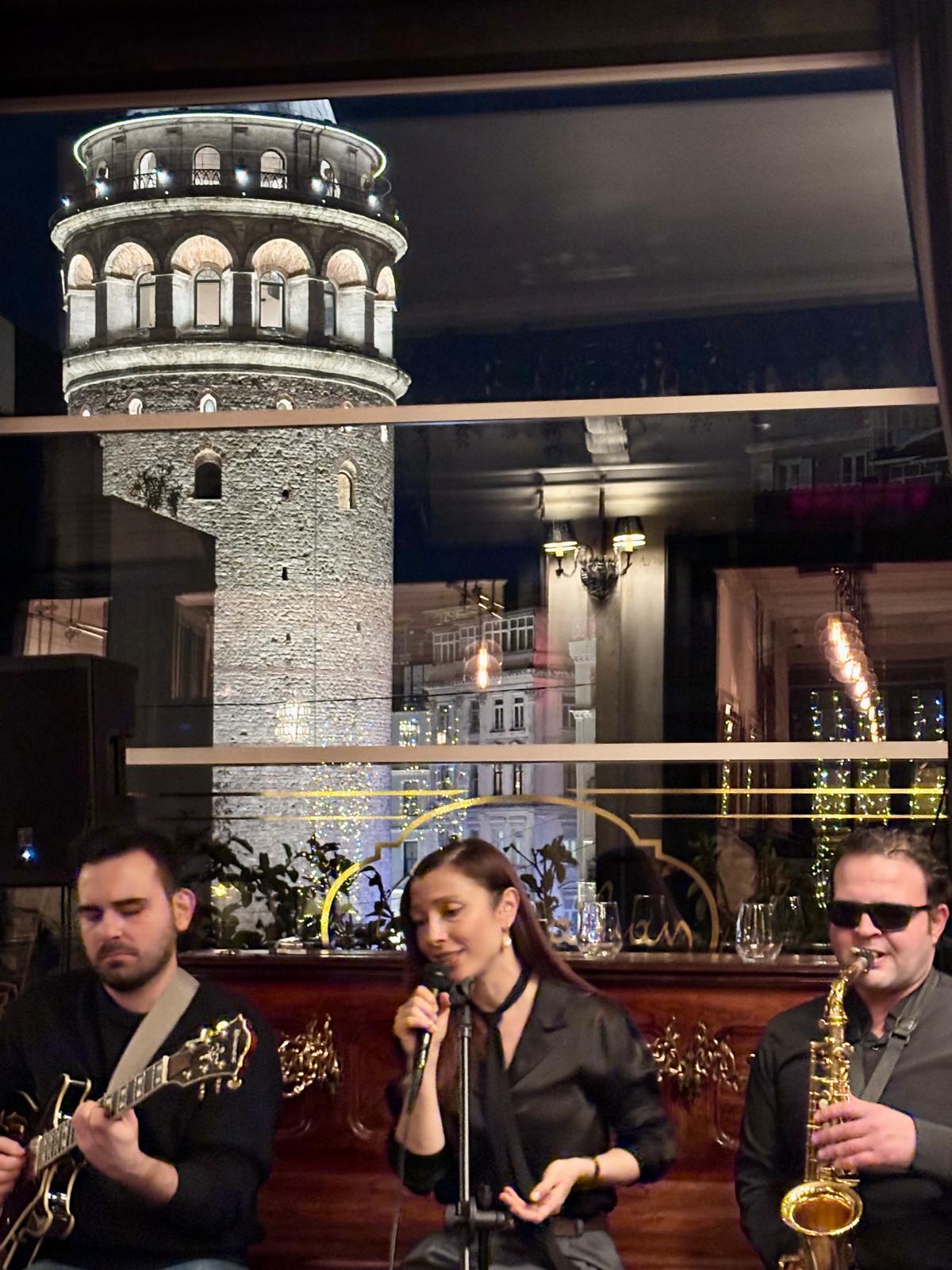
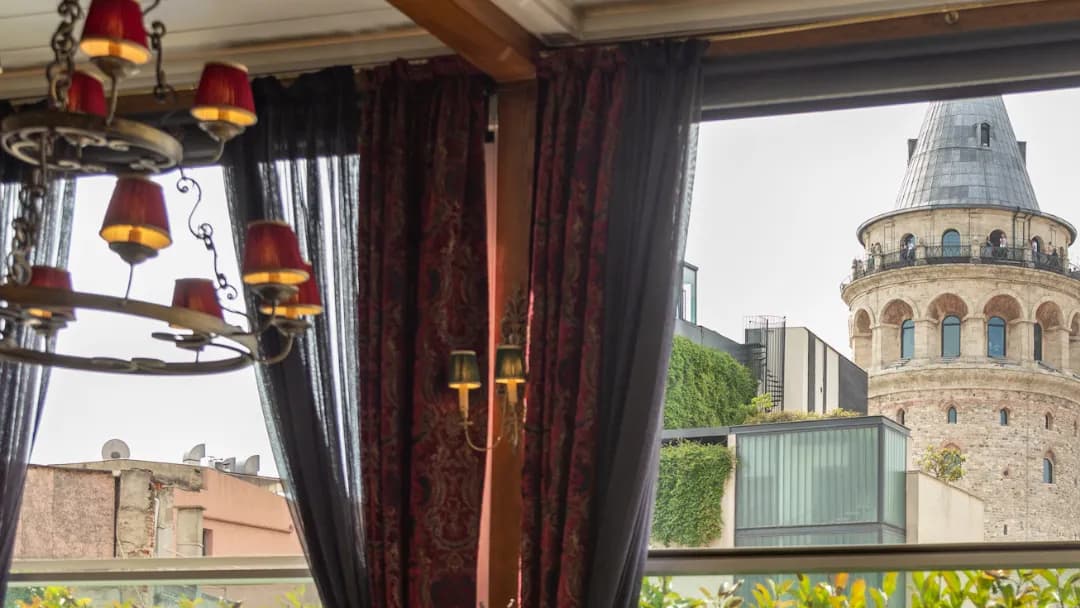
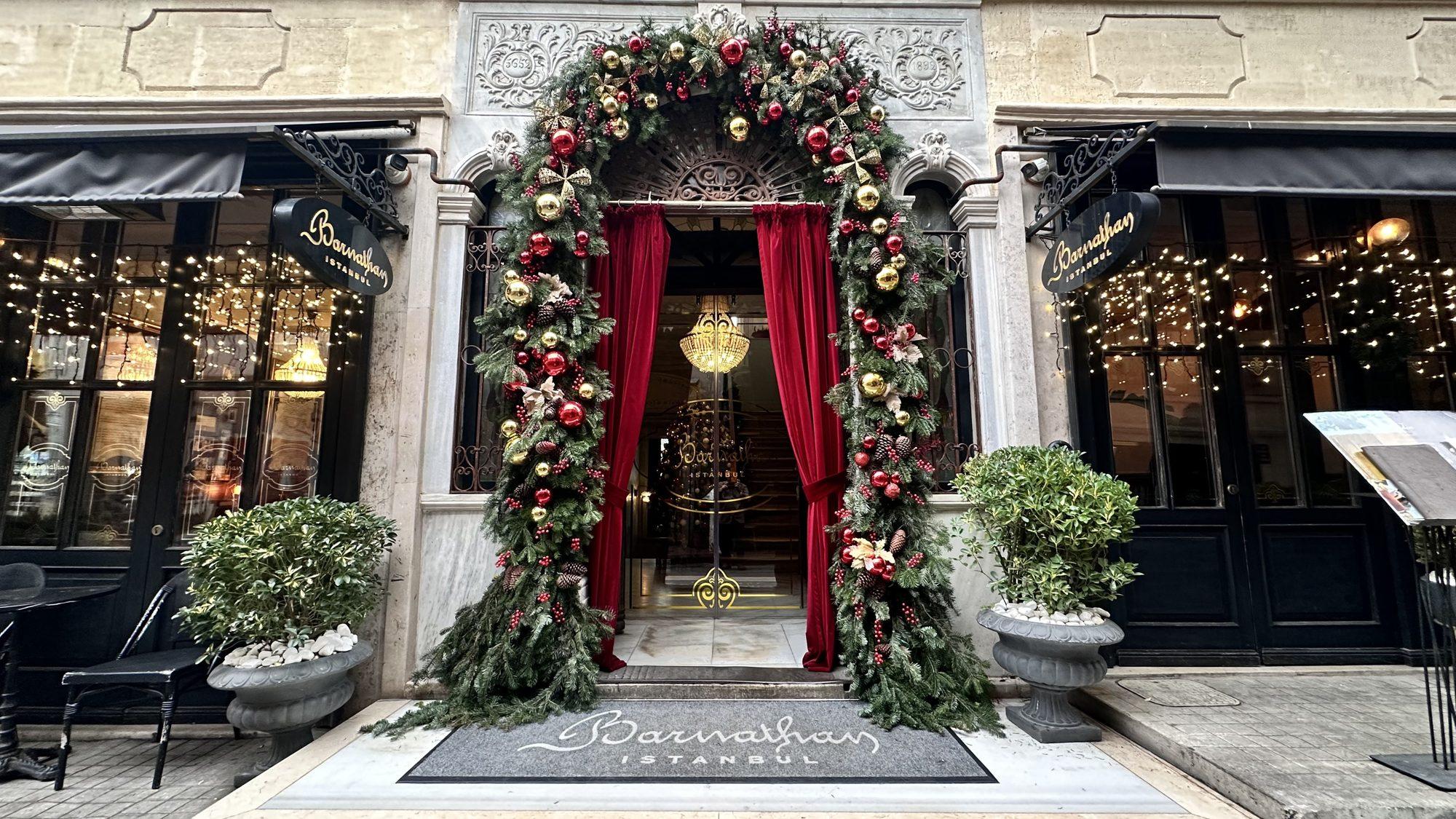
While Pera's New Year nights were at the height of their fame, in 1892 the Barnathan Apartment was rising right next to Galata Tower. In the garden of the same building, at Barnathan Garden, the new year is still welcomed with live music. On 31 December there are two sittings: the first is an early New Year dinner with piano, the second covers the countdown and the first hour of the new year with a live performance. For the programme and bookings, see our New Year's Eve in Galata page. We have gathered other options in the city in New Year's Eve programmes in Istanbul.
Frequently asked questions
Did the Ottomans celebrate New Year?
For Muslims, the year began with the month of Muharram in the Islamic calendar, and 1 January was not celebrated. The Christian communities of Galata and Pera, however, celebrated New Year throughout the 19th century, and Muslim Istanbulites joined them as neighbours.
When did 1 January become New Year's Day in Turkey?
A law passed on 26 December 1925 moved Turkey to the Gregorian calendar from 1 January 1926. 1 January became an official holiday with the public holidays law of 1935.
Where was the first New Year's ball in Istanbul held?
The first New Year's ball attended by Ottoman statesmen was given in 1829 by the British ambassador aboard the frigate Blonde in the Golden Horn. The Republic's first New Year's ball was held on the last night of 1925 in Pera.
Sources
- Ahmet Rasim, "Evvelki Yılbaşılar" (1926).
- Refik Halid Karay, "Eski ve Yeni Yılbaşı Geceleri", Panorama, issue 9 (January 1955).
- Erdem and Hanilçe, article on the "Yıldız İstanbul Belediye Gazinosu", DergiPark.