Hotels in Galata did not begin with a hotel; they began with a rented room. From the 18th century onwards, foreign merchants arriving in Istanbul stayed in Galata's hans, and later in boarding houses and rooms let by Galata families. Ambassadors, meanwhile, were lodged at the Elçi Hanı in Çemberlitaş until they found a place of their own in Galata or Pera. In the 19th century this tradition of rented rooms turned into what we now call a hotel, starting right beside Galata Tower. This article follows that change through architect Meltem Baslo's 1998 thesis on the hotels of Galata and Beyoğlu.
A boarding house in Kuledibi: Hôtel des Quatre Nations (1840)
According to Baslo, the Hôtel des Quatre Nations, opened in 1840 near Galata Tower around the church of Sankt Georg, is counted by many sources as Istanbul's first modern hotel. But in the thesis's description it looked more like a large boarding house than a hotel, far less comfortable than the hotels at the end of the century. Baslo sees it as the stepping stone for the people of Galata, who had been running inns and boarding houses since the 1700s, on their way to hotel-keeping. It ran until 1847.
Everyone at the same table: Hôtel d'Angleterre (1841)
A year later, the Hôtel d'Angleterre opened on the corner where İstiklal Avenue meets Kumbaracı Yokuşu. In Baslo's words it is the first hotel in Beyoğlu whose location is known for certain. Boarding-house habits carried on here too. Guests ate together at set times around a large table, with the owner at its head. The menu was "table d'hôte": a single list, with nothing else to choose. The rooms were furnished with luxury pieces but had no bathrooms; guests shared bathrooms on each floor. That was normal in European hotels of the time.
The English name was no accident. Baslo writes that it was English travellers who turned tourism into an industry, and that Beyoğlu's first big hotels took names like d'Angleterre, Grand Hôtel de Londres and Bristol as a result.
Why Pera?
Three of the reasons the thesis lists stand out:
- Close to the embassies: newcomers got to know Istanbul through the embassies and the merchants around them. Hotels opened near the embassies, often named after those countries: Hôtel Français, d'Angleterre, de Rome, d'Athènes.
- A European way of life: Western travellers found the comforts they were used to in Pera. They toured the rest of Istanbul on day trips, like an open-air museum.
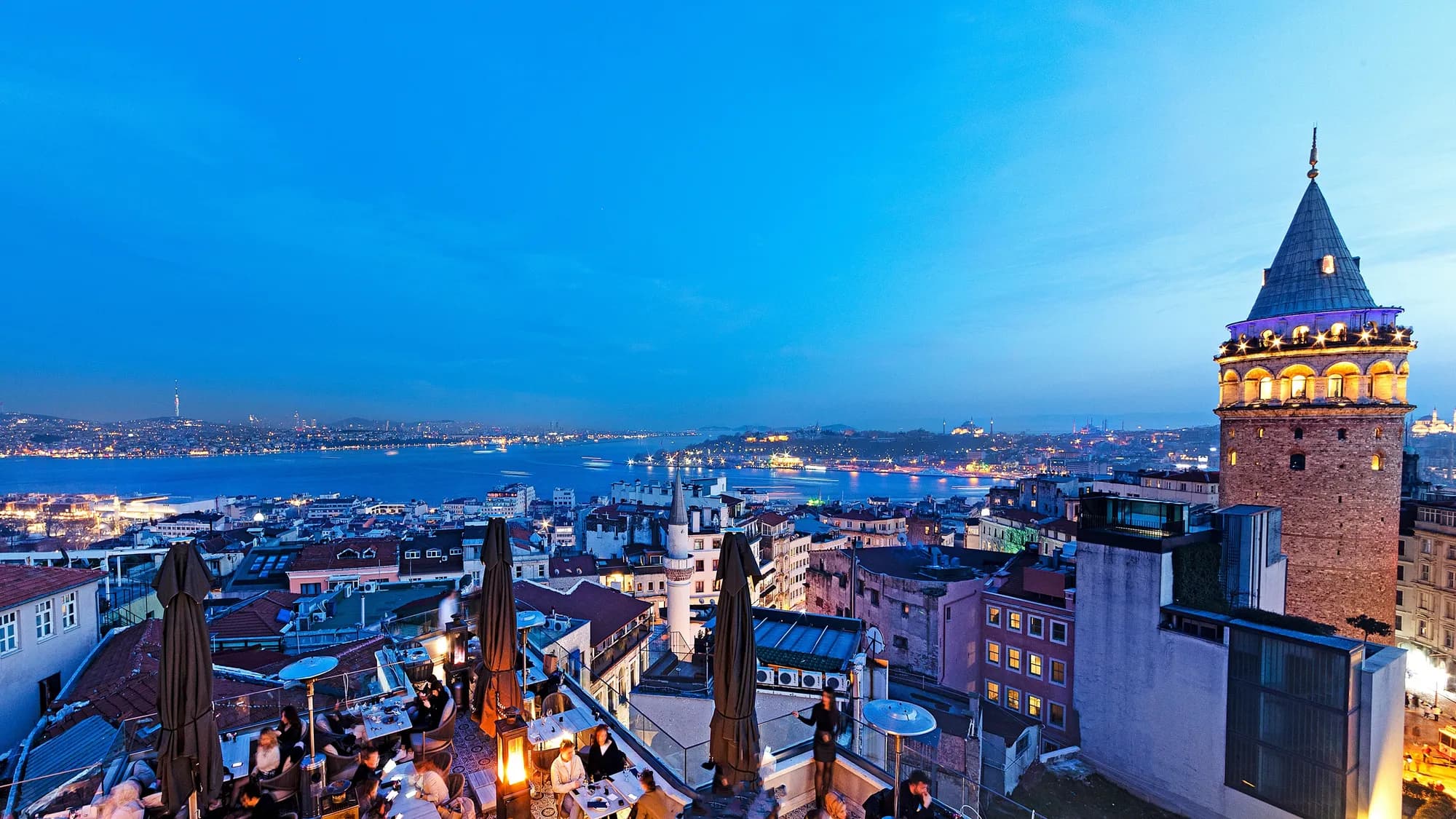
- The view: in the first half of the century the tall buildings of today's Tepebaşı did not yet exist. Hotels looked out over both the Golden Horn and Sarayburnu.
The Crimean War and Tepebaşı
The Crimean War (1853–1856) suddenly filled Pera. As Fatih Akyüz relates from the Ottoman archives, when lodgings were sought for a French general arriving in Istanbul, Beyoğlu was judged suitable because it was central. In the end the general was given the house of a foreign doctor, opposite an eating house called the "Otel de Pera". The place with "hotel" in its name was, at the time, a restaurant.
During the war years the French military band played concerts for the people of Pera on the flat ground above the cemetery slope at Tepebaşı. One by one, hotels moved to that slope:
- Hôtel de Byzance (1849)
- Hôtel de France (1851)
- Grand Hôtel Continental (1857)
- In 1876 the d'Angleterre moved to its new site next to the British Embassy.
Private bathrooms and masonry buildings
After the middle of the century, hotel-keeping changed:
- The menu: the table d'hôte grew to several dishes, so guests could choose.
- The rooms for eating: the shared dining rooms of the han tradition gave way to restaurants with separate tables and coffee salons.
- The bedrooms: bathrooms began to move into the rooms.
The great Beyoğlu fire of 1870 destroyed much of the district's timber housing. From the 1880s hotels were built in masonry, and newspaper advertisements made a point of saying so.
The grand hotels: the 1890s
According to Baslo, the first hotels had opened in converted houses. Towards the end of the century big investors began to build their own hotel buildings. Four went up in less than ten years:
- Grand Hôtel de Londres (1891): on the corner of Meşrutiyet Avenue and Kallavi Street. According to Baslo, the first building known to have been built as a hotel. With bathrooms in the rooms, a hydraulic lift and a famous restaurant, it set the pattern for the "grand hotels" that followed. The building still operates today as the Büyük Londra Hotel.
- Hôtel Bristol (1893): reading and coffee salons on either side of the entrance, with the restaurant at the back. It ran as a hotel until 1980. Architect Achille Manoussos's building is today the Pera Museum.
- Pera Palace (mid-1890s): built at the last stop of the Orient Express for the train's wealthy passengers. Porphyry columns, gilded ceilings and a great ballroom gave it an "Oriental" air to match the train's name. Its entrance was on Meşrutiyet Avenue, because Tozkoparan Avenue had not yet been opened, and the restaurant and ballroom faced the Golden Horn. It still operates today as the Pera Palace.
- Tokatlıyan (1897): on the corner of İstiklal Avenue and Solakzade Street. It lacked the views of the Tepebaşı hotels but stood right on the avenue. The novelty Baslo points out is that its restaurant and coffee salon faced the street. People coming up to Beyoğlu often chose this café, where you could watch the passers-by from inside.
What happened when the hotels closed?
Most of Pera's hotels closed in the middle of the 20th century. Baslo also records the later lives of their buildings:
- Tokatlıyan: after it closed, the ground floor was completely rebuilt as an arcade and offices.
- Grand Hôtel et Restaurant Luxembourg: opened in 1862 opposite the Naum Theatre. It became a café and billiard hall in the Republican period and closed in the 1950s.
- Hôtel du Nord (1871): demolished in the 1970s; Odakule was built on its site in 1975.
- Grand Hôtel Kroecker and Hôtel Novotny: when the thesis was written, their buildings were in use as the Istanbul Chamber of Industry and the Beyoğlu Teachers' House.
Today: from apartment building to hotel
Hotels in Galata began with rented rooms. Today they are following the same path again: apartment buildings and mansions built for families at the end of the 19th century are becoming hotels.
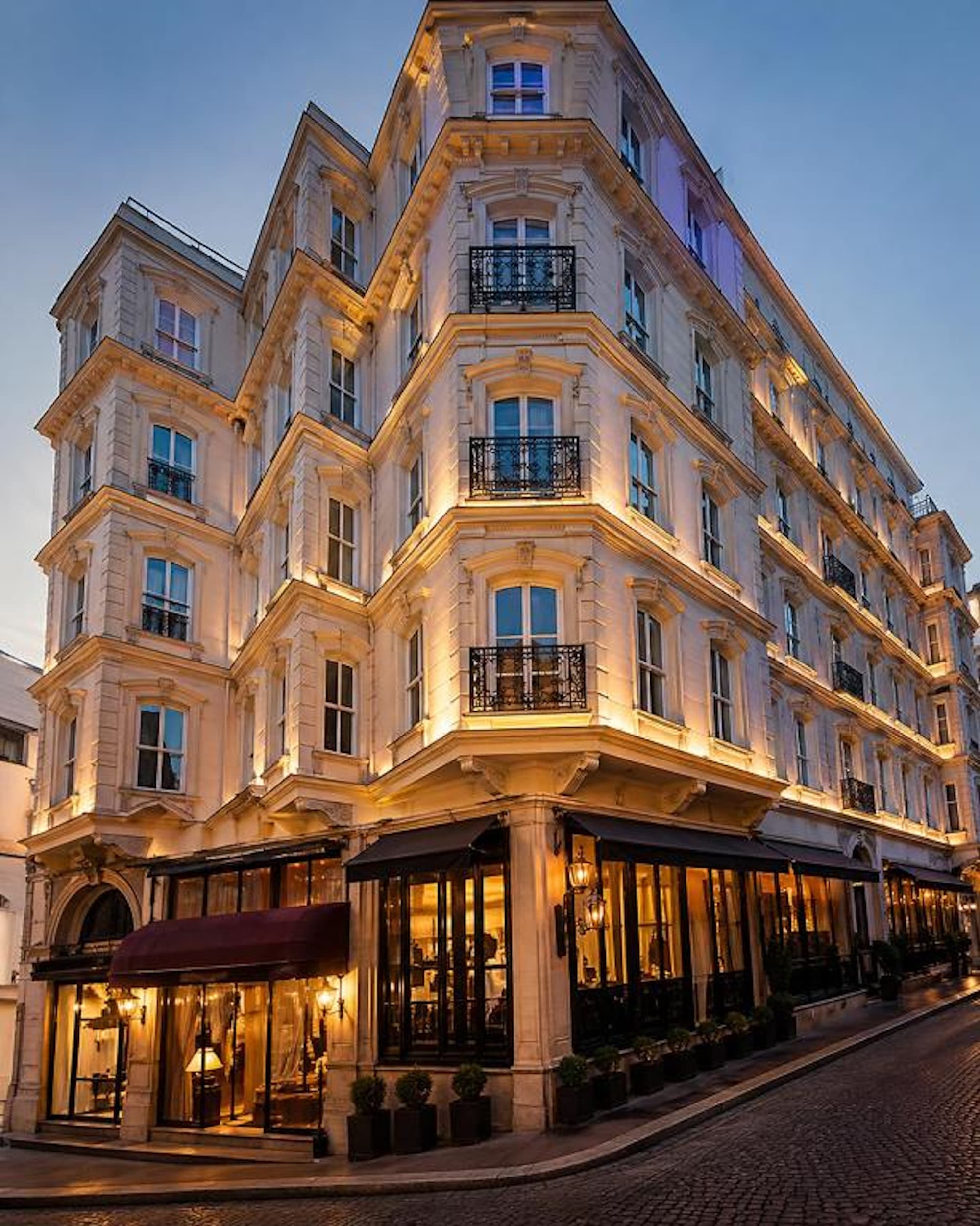
The Barnathan Apartments, with the dates 1892 and 1893 carved over their doors, are today Meroddi Barnathan Hotel. Our other hotels in similar buildings:
- Bağdatlıyan, in Ohannes Bağdatlıyan's apartment building
- Pera Flats, in the flats of the Maison Madeleny
- Galata Mansion, in a bay-windowed mansion on Serdar-ı Ekrem
- La Porta, next door to the old gates of the Galata walls
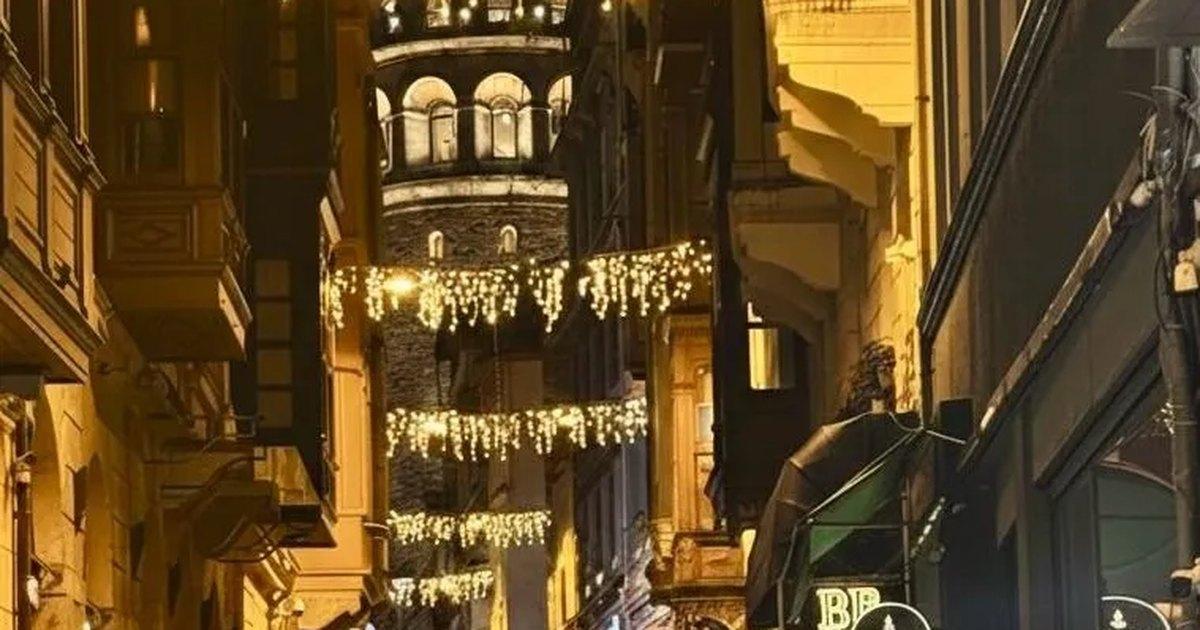
All are a few minutes' walk from Galata Tower, in the streets where the Quatre Nations once welcomed its guests. All our hotels: Galata hotels.
For Pera's nightlife, see our article on Frederick Thomas, founder of the Maksim nightclub. For the Barnathan family and the building in the press, see "Barnathan in the press".
Sources
- Meltem Baslo, Tarih boyunca Galata-Beyoğlu kurgusunun gelişimi ve XIX. yy. otellerinin bu gelişime etkileri (master's thesis, 1998), YÖK thesis no. 078393.
- Fatih Akyüz, Kırım savaşının lojistiğinde İstanbul'un yeri (master's thesis, 2006), YÖK thesis no. 209896.
- Pera Museum, "About", peramuseum.org.
Frequently asked questions
What was the first hotel in Istanbul?
Sources disagree. The Hôtel des Quatre Nations, opened near Galata Tower in 1840, is counted by many as the first modern hotel, but according to architect Meltem Baslo's thesis it was more like a large boarding house. The first hotel in Beyoğlu whose location is known for certain is the Hôtel d'Angleterre, opened in 1841 on the corner of İstiklal Avenue and Kumbaracı Yokuşu.
Where was the Tokatlıyan Hotel, and what is it today?
Tokatlıyan opened in 1897 on the corner of İstiklal Avenue and Solakzade Street. With its restaurant and coffee salon facing the street, it was one of Beyoğlu's most visible meeting places. After the hotel closed, its ground floor was turned into an arcade and offices.
Which was the first Beyoğlu hotel built as a hotel?
According to Baslo, the Grand Hôtel de Londres, opened in 1891 on the corner of Meşrutiyet Avenue and Kallavi Street. Earlier hotels had opened in converted houses.
What was the Pera Museum building originally?
The Pera Museum is housed in the former Bristol Hotel, designed by architect Achille Manoussos and completed in 1893. The Bristol ran as a hotel until 1980.