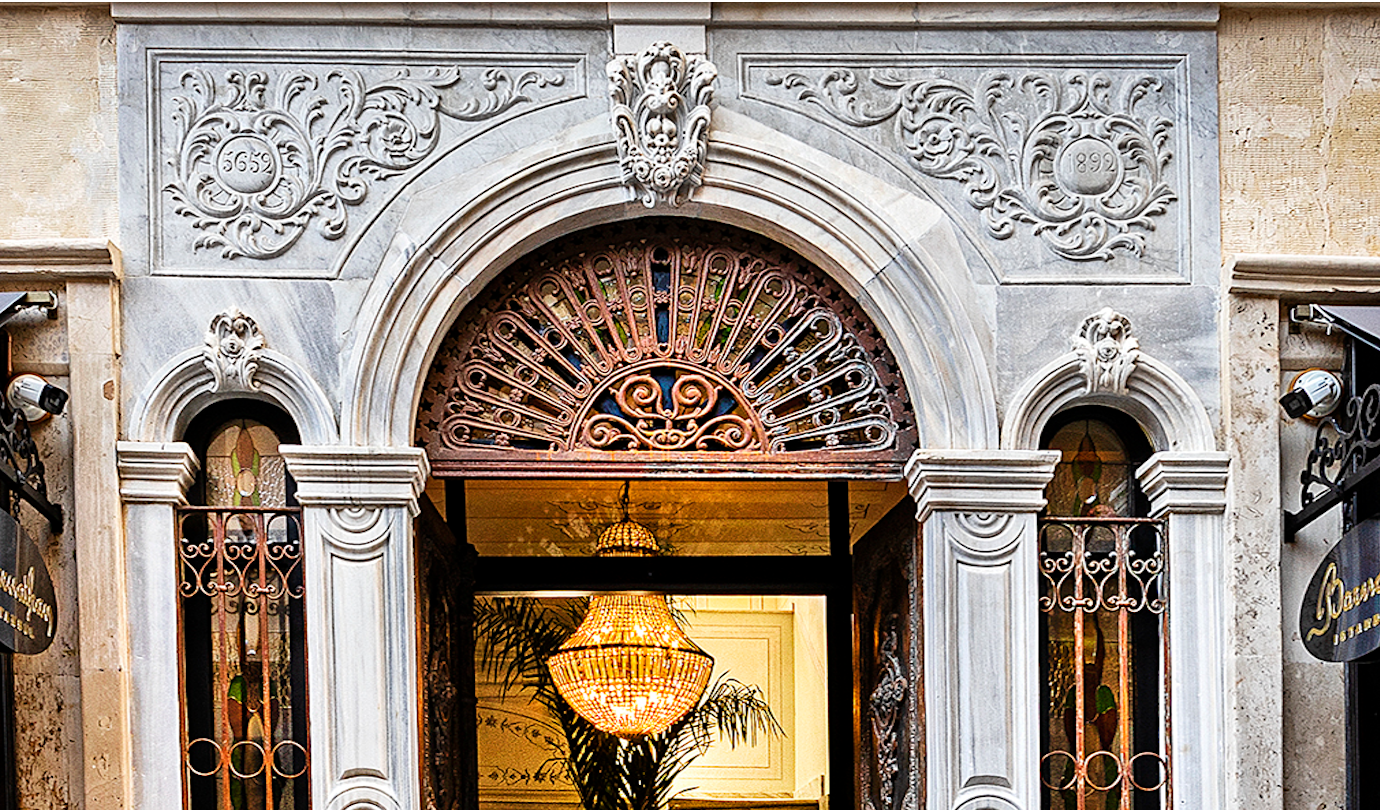
As you enter through the doors of Meroddi Barnathan, look up and you will see a date amid the leaf reliefs carved into the stone: 1892. At the second entrance a few steps away, another: 1893. And beside both, the numbers of another calendar: 5652 and 5654 — the same years in the Jewish calendar. A building having its identity inscribed in stone using two different calendars tells you, right at the door, who built it and what kind of Istanbul it was built in.
A five-century journey from Spain to Galata
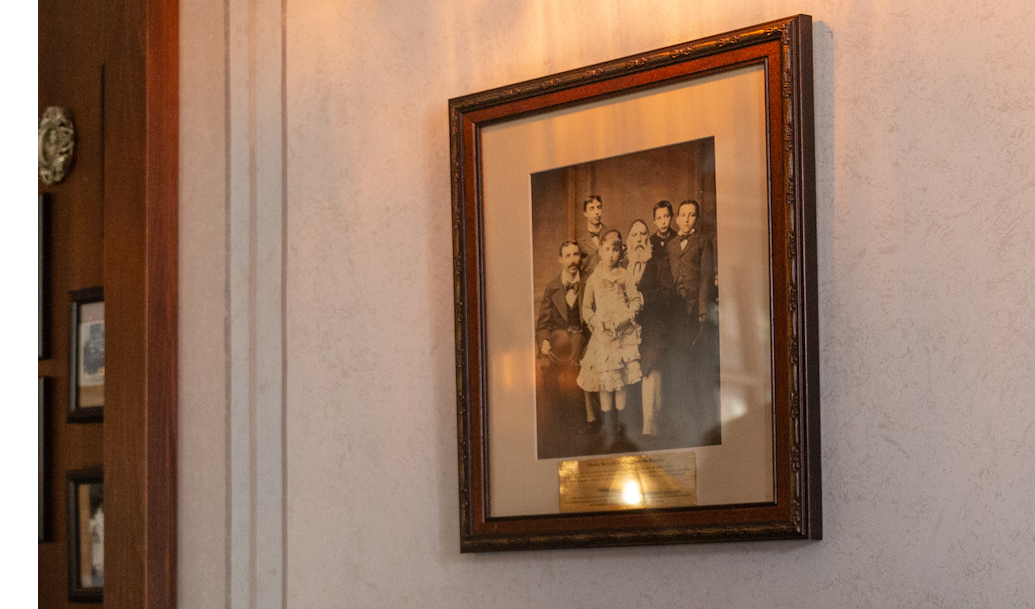
Barnathan is the name of the family that commissioned the building. The Barnathans were among the Sephardic families who migrated from Spain to Ottoman lands in 1492, settling in Galata and its surroundings from that date onward. Their surname means "Daughter of the Prophet Nathan" in Hebrew. By the nineteenth century, the family was among Galata’s notable merchants and bankers; the family elder, Nissim Barnathan (1827–1907), was both a banker and the owner of Barnathan Han in Eminönü. Trade annuals of the era show family members working in banking and brokerage, and trading cigarette paper with Europe.
A new city, a new way of life
The building rose during the decades when Galata was changing most rapidly. The city walls had been demolished, streets illuminated, the Tünel had passed through the hill, and after major fires, the wooden city had begun to give way to masonry buildings. The idea of apartment living was so new to Istanbul that Barnathan became one of the city’s earliest examples of the type.
The first tenant list from 1892 is a small portrait of the Galata of its era: a mirror-maker, a doctor, bankers, and employees of the Ottoman Bank and the Oriental Railways. In a city shaped by the mansion lifestyle, these people were the first generation to live by renting separate flats under the same roof — in other words, the apartment life we all know today.
A plan drawn on silk
The most touching part of the story emerged years later. Historian Çiğdem Oğuz, who was researching the building’s history, came across a comment beneath a photograph of the Barnathan Apartment on a photography website: its author was one of the family’s descendants scattered across the world. This coincidence became a family reunion across continents — and when Francis Wacziarg, a family member living in India, came to Istanbul, he brought a treasured item with him: the original building plan, drawn on silk and dated 15 February 1896, carefully preserved by his mother. Bearing the signature of engineer Charles Maruletto, this plan carries every detail of the building into the present day.
Masterful details
Barnathan is a neoclassical building with Baroque details, and its elegance lies in its particulars: reliefs of roses, grape clusters and acanthus leaves on the surrounds; Marmara marble on the steps, cloudy Carrara stone brought from Italy on the floor landings; ceilings 3.40 metres high. Its most distinctive feature is its balconies — unlike those of other Beyoğlu apartment buildings of the period, these projections in the craftsmanship of classic French balconies extend from the building without any supports. Their undersides are entirely open; examples are rare in Istanbul.
Its name changed, but did it remain? Quite the opposite
The twentieth century saw the building’s owners and name change several times; the family scattered across the world, and the apartment building was known by other names for many years. But stone is patient: the engraving “Barnathan Han” above the second entrance quietly waited through all those years. Today, through restoration, the building has regained both its name and its story — and just as it welcomed its first tenants 130 years ago, it now welcomes its guests.
If you pause for a moment as you pass the dates carved into the stone at the entrance, you will be continuing one of Istanbul’s finest habits: reading the city layer by layer.
The information in this article has been compiled from the book "Barnathan Apartmanları" (Çiğdem Oğuz, 2016), published with contributions from Nar Yatırım. You can browse the book at the Meroddi Barnathan reception. We told the story of the Tünel, which passes beneath the building, in this article.