In the 19th century, as today, evenings in Beyoğlu were spent with music. What has changed are the names of the stages: Bosco, Naum, Concordia, Tepebaşı. This article follows those stages, set up a few streets above Galata Tower, through master's theses that searched the newspapers and archives of the period.
From Galata to Pera
According to architect Meltem Baslo, Istanbul's first theatre opened in Galata at the end of the 18th century. Its owner, J. Giustiniani, moved it to Beyoğlu in 1827. That was how entertainment began its climb up the hill to Pera.
In the early 1840s Beyoğlu had a stage run by Bosco, known for his illusion shows. As Özgecan Karadağlı relates from the newspaper Ceride-i Havadis, Bellini's Norma was performed there on 18 November 1841 and Donizetti's Belisario in 1842. The operas were sung in Italian. According to Umut Gökoğlu, the theatre began translating the librettos into Turkish and handing them out so the audience could follow; the first to be printed was Belisario.
The Naum Theatre
In 1844 Tütüncüoğlu Mihail Naum Efendi bought Bosco's building, refitted it and opened it as the Naum Theatre. The first performance, on 23 December 1844, was Donizetti's Lucrezia Borgia. The building burned in the great Beyoğlu fire of 1846. Naum Efendi asked the state and the embassies for help, rebuilt the theatre and reopened it in 1848 with Verdi's Macbeth.
For the next twenty years the Naum was Pera's opera house. New European operas reached the city quickly: according to Karadağlı's list, Rigoletto was first staged in Istanbul in 1854 and La Traviata in 1856. In the memoirs of Said Naum Duhani, every politician of the day went to the Naum, and Sultans Abdülmecid and Abdülaziz attended performances of the major operas.
Musicians linked the theatre to the palace. The Naum's conductor, Callisto Guatelli, moved to the palace in 1857. According to İlyas Ceran, he took charge of the palace's music after Donizetti Pasha and died in 1899 with the title of pasha. The theatre of Dolmabahçe Palace itself opened on 12 January 1859 with a performance by the Naum company. The Armenian composer Dikran Çuhacıyan, after his opera Arşak II was banned, reworked it and had an Italian company stage it at the Naum as Olympia.
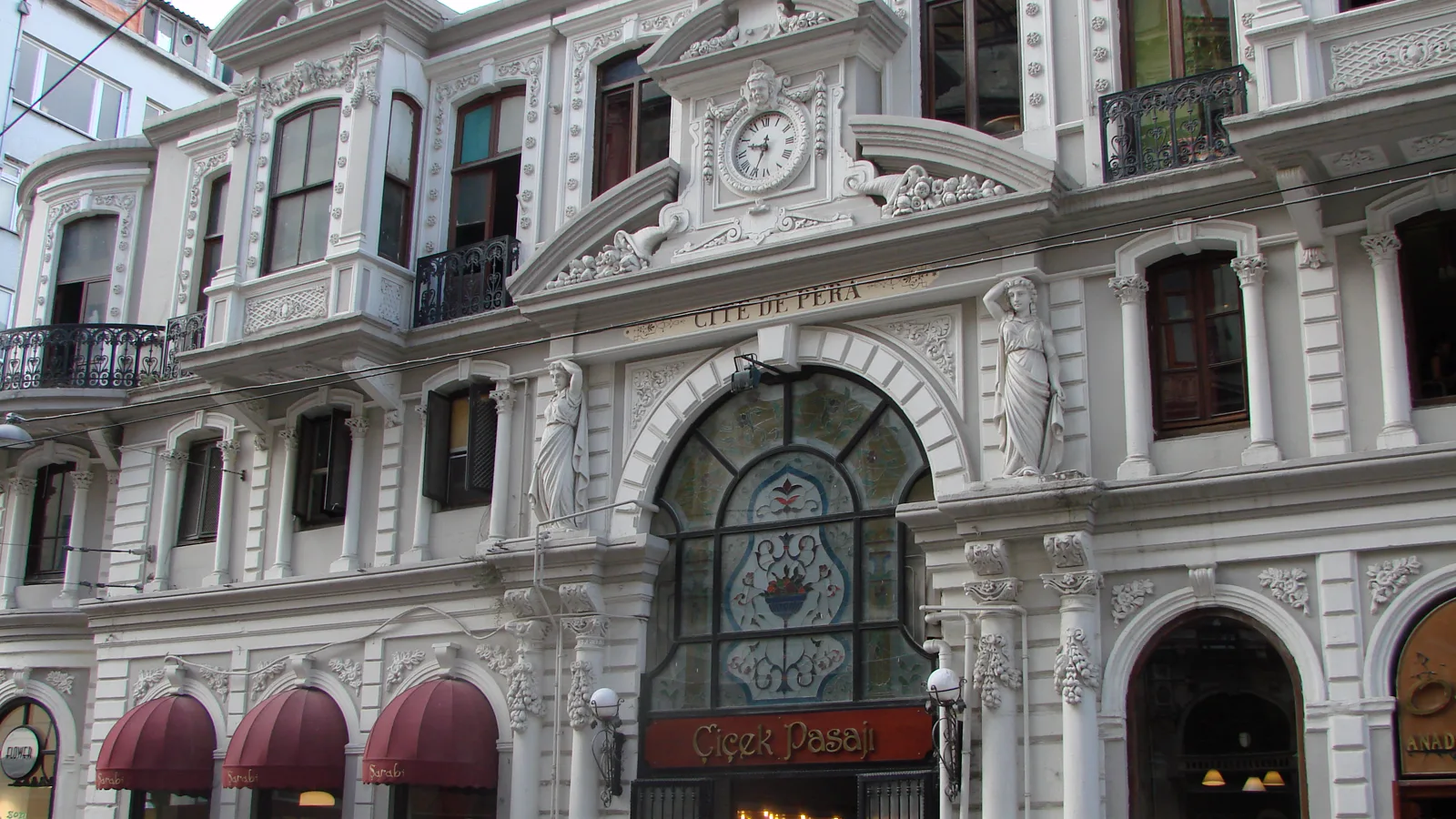
The end came on 5 June 1870. A fire that started in Feridiye Street burned Beyoğlu from Galatasaray to Taksim. The Naum burned too and never reopened. According to Baslo, the Çiçek Pasajı (Cité de Péra) stands on its site today.
Tepebaşı: from cemetery slope to concert garden
In the mid-19th century today's Tepebaşı was a cemetery slope known as the Petits-Champs. During the Crimean War, in 1854, the French military band in the city played for the people of Pera and foreign visitors on the flat ground at the top of the slope, and the concerts were repeated several times. A café that began here with tea and coffee later became an open-air restaurant, and it too was lost in the 1870 fire.
In 1874–75 Blacque Bey, head of the Sixth Municipal District, had the terrace relaid with earth dug out of the Tünel tunnel. In 1880 a "Jardin Public" opened here, with an artificial lake, gravel paths, wrought-iron seats and a platform for the orchestra. In the novels of the period, characters go "to the Tepebaşı garden" in the evening.
Stages soon gathered around the garden. A winter theatre with five hundred seats was built towards the 1880s. In 1889 an open-air summer theatre with boxes followed; because it sat on the slope it was called the "Anfi". In 1905 a closed hall for twelve hundred people replaced it, and in 1908 Pathé opened a cinema there. In 1912 an exhibition pavilion in one corner of the garden became a variety theatre called the Garden Bar. In the Republican period the winter theatre became the drama stage of the City Theatres, and the garden served as a gazino, an open-air music hall, between 1940 and 1960.
Theatres on the avenue, a concert hall in an arcade
After the Naum burned, entertainment spread along the avenue. Baslo lists the Concordia Theatre and Garden, opened in 1871 where the church of St Anthony stands today, and two variety theatres: one opened in 1875 on the site of the old Café Luxembourg, the other in 1892 in the Halep Pasajı.
In the Hacopulo arcade, which links İstiklal to Meşrutiyet Avenue, the Salle Adam opened at the end of 1869. According to Handan Şen this music shop sold and repaired instruments, and because Pera had few concert halls its upper floor had been turned into a recital room. In the spring of 1877 a newspaper notice announced a concert there. In 1874 Çuhacıyan opened a school in the same arcade teaching opera in Turkish.
Turkish-language theatre also had its eye on Beyoğlu. The theatre licence granted to Güllü Agop on 16 March 1870 required him to open a theatre in Galata, Tophane and Beyoğlu within three years. Çuhacıyan's Leblebici Horhor Ağa opened on 11 January 1876 at the French Theatre in Beyoğlu and was played a hundred times that season. Novels followed these stages: in Ahmet Midhat's Esrâr-ı Cinâyât the characters meet at the Crone Gazino in Beyoğlu to talk over the day's events.
Cinema and carnival
According to Baslo, Istanbul's first public film screening took place in 1897 at the Sponeck beer hall in Galatasaray. For the full story of cinema in the district, see Galata Hub's article on cinema in Galata and Beyoğlu. In the 1930s costumed celebrations still filled the streets of Beyoğlu and Kurtuluş; the Tatavla fair was one of the best known of these carnivals.
After the First World War Pera met a new kind of music. Read how Frederick Bruce Thomas brought jazz to Istanbul in our article on the founder of the Maksim nightclub. The story of the Luxembourg hotel, opened opposite the Naum in 1862, is in our history of hotels in Galata and Pera.
Evening music in Galata today
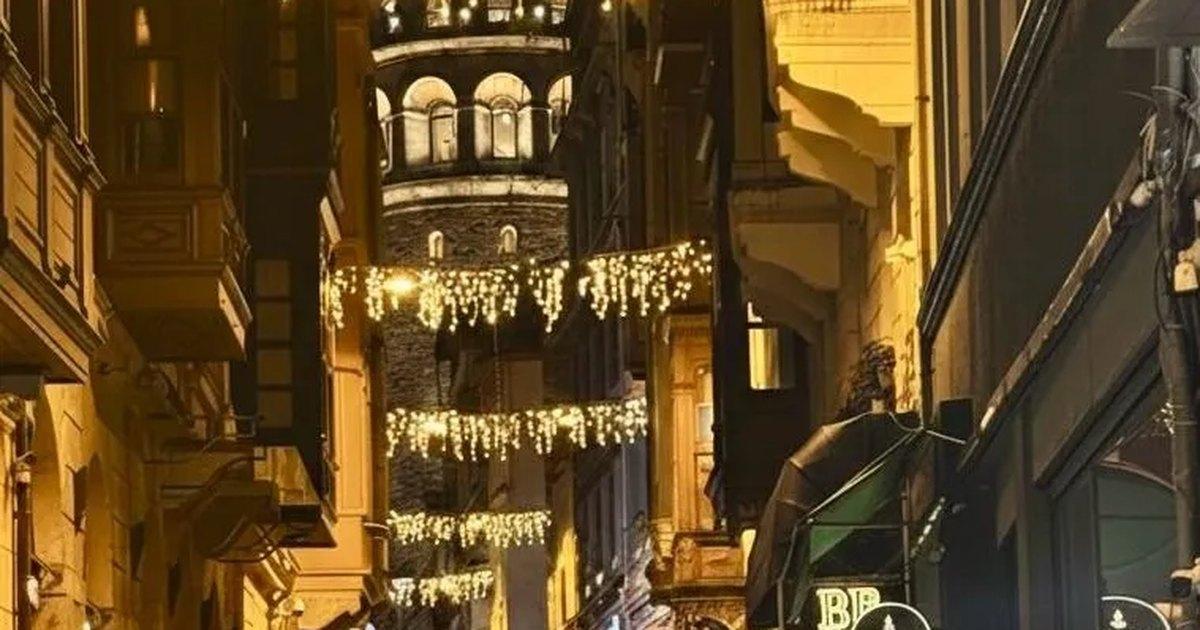
Next to Galata Tower, in the garden of the 1892 Barnathan Apartment, evenings at Barnathan Garden come with live music. On Friday, Saturday and Sunday evenings Jazz Weekend brings live jazz. See the week's programme in our event calendar.
Frequently asked questions
Where was the Naum Theatre, and what stands there today?
The Naum Theatre stood on today's İstiklal Avenue. According to architect Meltem Baslo's thesis, the Çiçek Pasajı (Cité de Péra) now stands on its site.
When did the Naum Theatre open, and when did it burn?
Mihail Naum Efendi opened the theatre in 1844; the first performance, on 23 December 1844, was Donizetti's Lucrezia Borgia. The building burned in 1846 and reopened in 1848. It burned again in the great Beyoğlu fire of 5 June 1870 and never reopened.
When was the first opera staged in Istanbul?
Sources give different years. Research based on the newspaper Ceride-i Havadis records Bellini's Norma on Bosco's stage in Beyoğlu on 18 November 1841; other sources name Belisario in 1842 as the first opera.
When did the Tepebaşı garden open?
In 1880, as a public garden on the slope of the Petits-Champs cemetery, with an artificial lake and an orchestra platform. Earlier, in 1854, the French military band had played concerts for the people of Pera on the same slope.
Sources
- Meltem Baslo, Tarih boyunca Galata-Beyoğlu kurgusunun gelişimi ve XIX. yy. otellerinin bu gelişime etkileri (master's thesis, 1998), YÖK thesis no. 078393.
- Özgecan Karadağlı, Türkiye'ye müzikli sahne sanatlarının girişi: Dikran Çuhacıyan öncesi ve sonrası (master's thesis, 2006), YÖK thesis no. 241218.
- Umut Gökoğlu, Operada şan tekniğinin tarihsel gelişimi (master's thesis, 2009), YÖK thesis no. 250938.
- İlyas Ceran, Cumhuriyet döneminde müzikte modernleşme süreci (master's thesis, 2010), YÖK thesis no. 274457.
- Emine Uzun, Tanzimat Dönemi Türk romanlarında Beyoğlu (master's thesis, 2007), YÖK thesis no. 217292.
- Handan Şen, Beyoğlu Hacopulo Pasajı ve koruma önerileri (master's thesis, 1998), YÖK thesis no. 079294.
- Çiğdem Gülizar Güler, Beyoğlu hanları ve şehirleşme ile toplumsal hayata katkıları (master's thesis, 2004), YÖK thesis no. 147279.
- Yasemin Gürel, Mimar Seyfi Arkan özelinde 1930–40 yılları Türk modernleşmesi (thesis, 2005), YÖK thesis no. 223705.
Cover photo: the Çiçek Pasajı, on the site of the Naum Theatre. Baristarim / Wikimedia Commons, public domain.