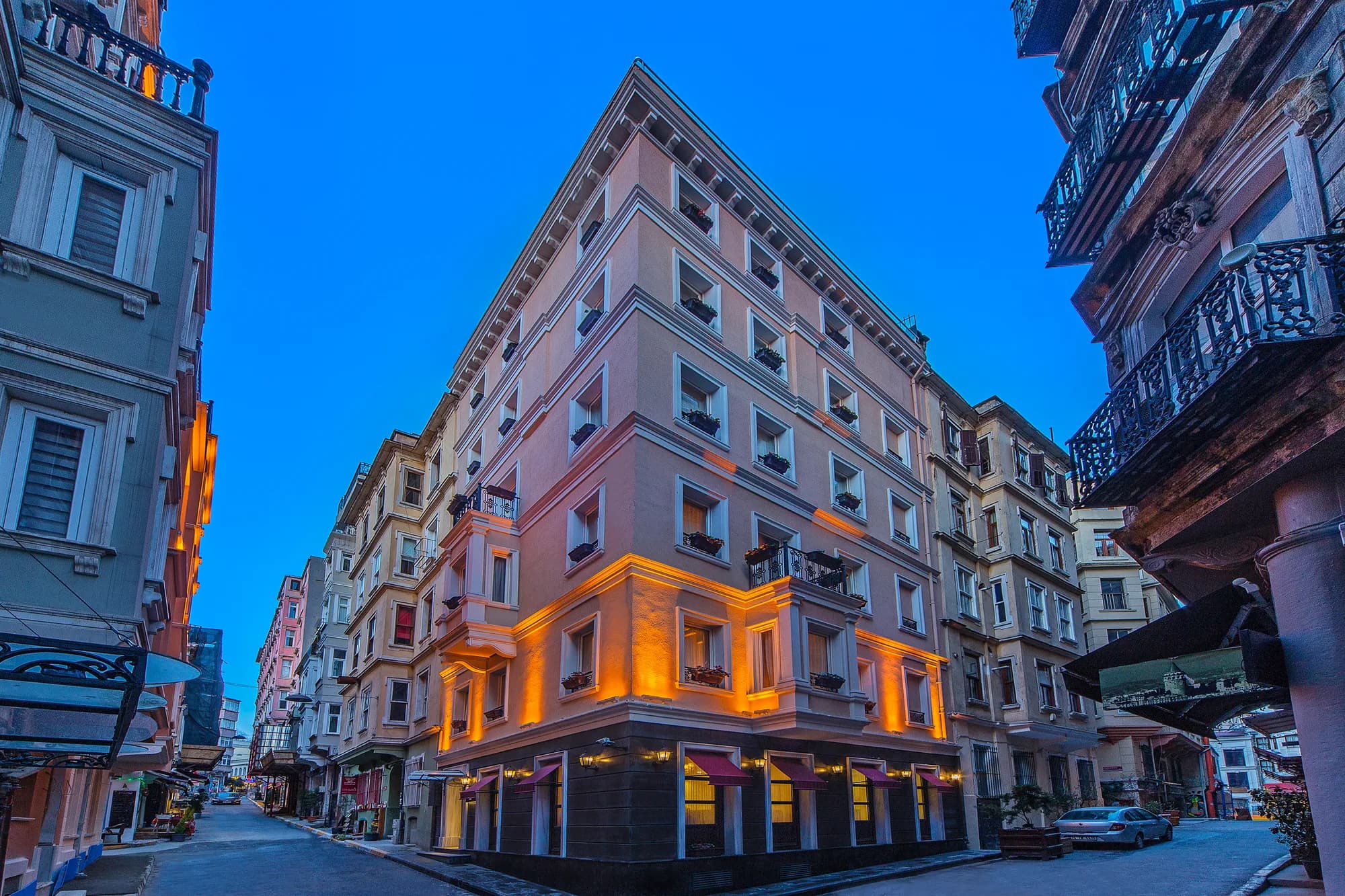
Some street names are ornamental; others describe a trade. Tımarcı Sokak, where Meroddi Pera Flats is located, and neighbouring Otçu Sokak belong to the latter group: these two names preserve the memory of work that was repeated here every morning 150 years ago.
1871: Horses came to the city
Türkiye’s first horse-drawn tram line began service in 1871 — operating just around 150 metres from these streets. Horses pulling carriages along the rails were revolutionary for Istanbul at the time: for the first time, scheduled rail-based public transport became part of city life. But every revolution has its backstage. The horses that pulled those carriages needed daily grooming, rest and feed.
These streets were that backstage. Tımarcı Sokak takes its name from this past, when tram horses were groomed here — brushed and cared for. Its immediate neighbour, Otçu Sokak, recalls the days when the horses grazed and their feed was prepared. In other words, Istanbul’s first public transport fleet once caught its breath on the pavements where you now walk with your suitcase.
The street’s former name: Cerrahpaşa
There is another layer to the story. From the book written about Barnathan Apartments, we learn that Tımarcı Sokak’s earlier name was Cerrahpaşa. Insurance maps dated 1906 show a woodshed and a wine house on this street, with a pharmacy and grocer’s shop on the corner. With its cafés, wine houses, shoemakers and tailors, this was a lively market street a century ago as well — today’s fabric of cafés and workshops is, in fact, the continuation of an old habit.
A neighbour with doves
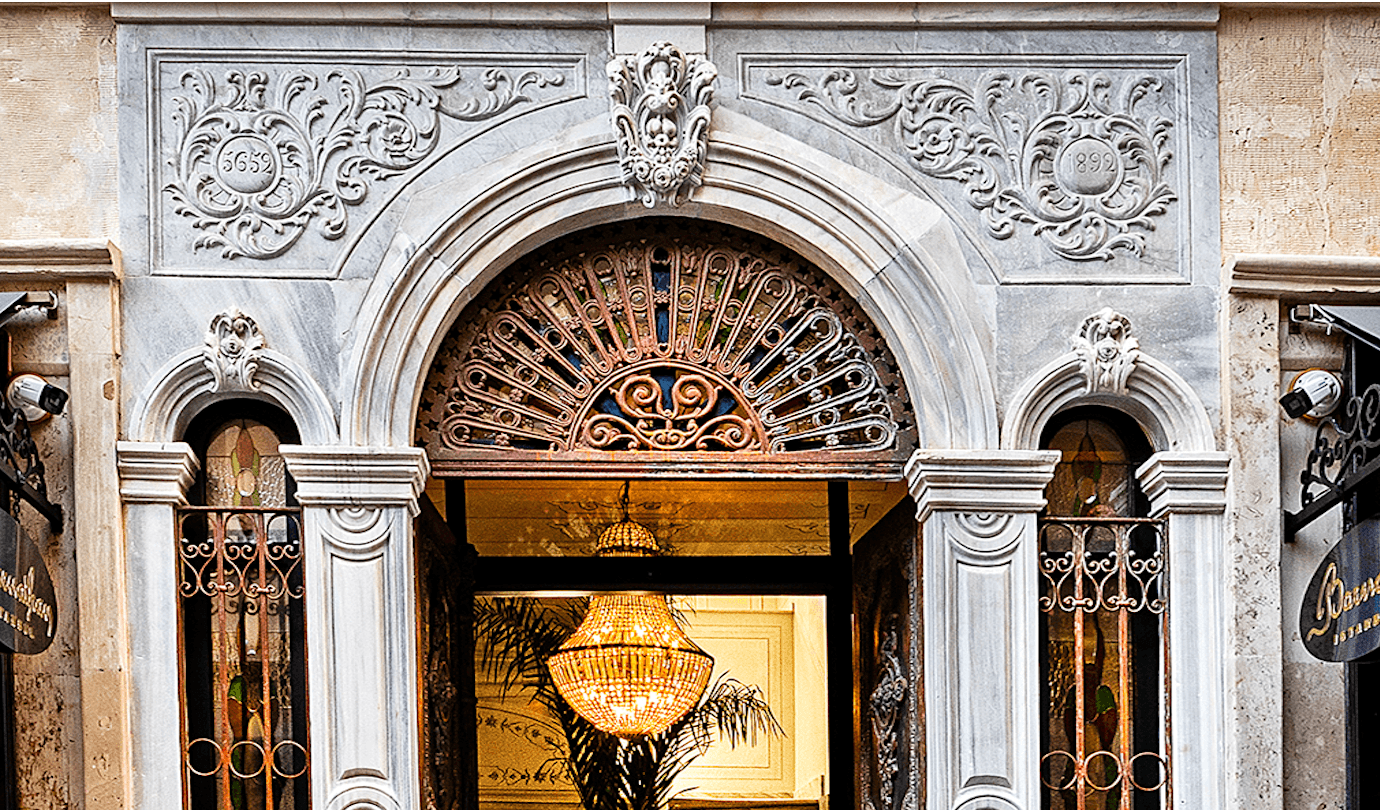
The grand façade you will see from one end of Tımarcı Sokak belongs to the Barnathan Apartments, built in 1892 — the 130-year-old neighbour opposite Meroddi Pera Flats. And this neighbour has a little-known feature: since the day the building was constructed, doves have nested among the stone reliefs on its cornices. The sound of horseshoes faded long ago, the tram became electric, and the street changed its name several times; yet the doves remain on the same cornices. Sometimes, this is how a city’s history is measured — in bird nests.
As you walk today
Step out of Pera Flats for a two-minute stroll: from Tımarcı to Otçu, then on to Şahkulu. Reading the street signs as you walk is a free history lesson in this neighbourhood. After following the horses’ trail, you may wish to continue to the underground story of the Tünel or take a closer look at the histories carved in stone across the street.
To stay among these streets: Meroddi Pera Flats →