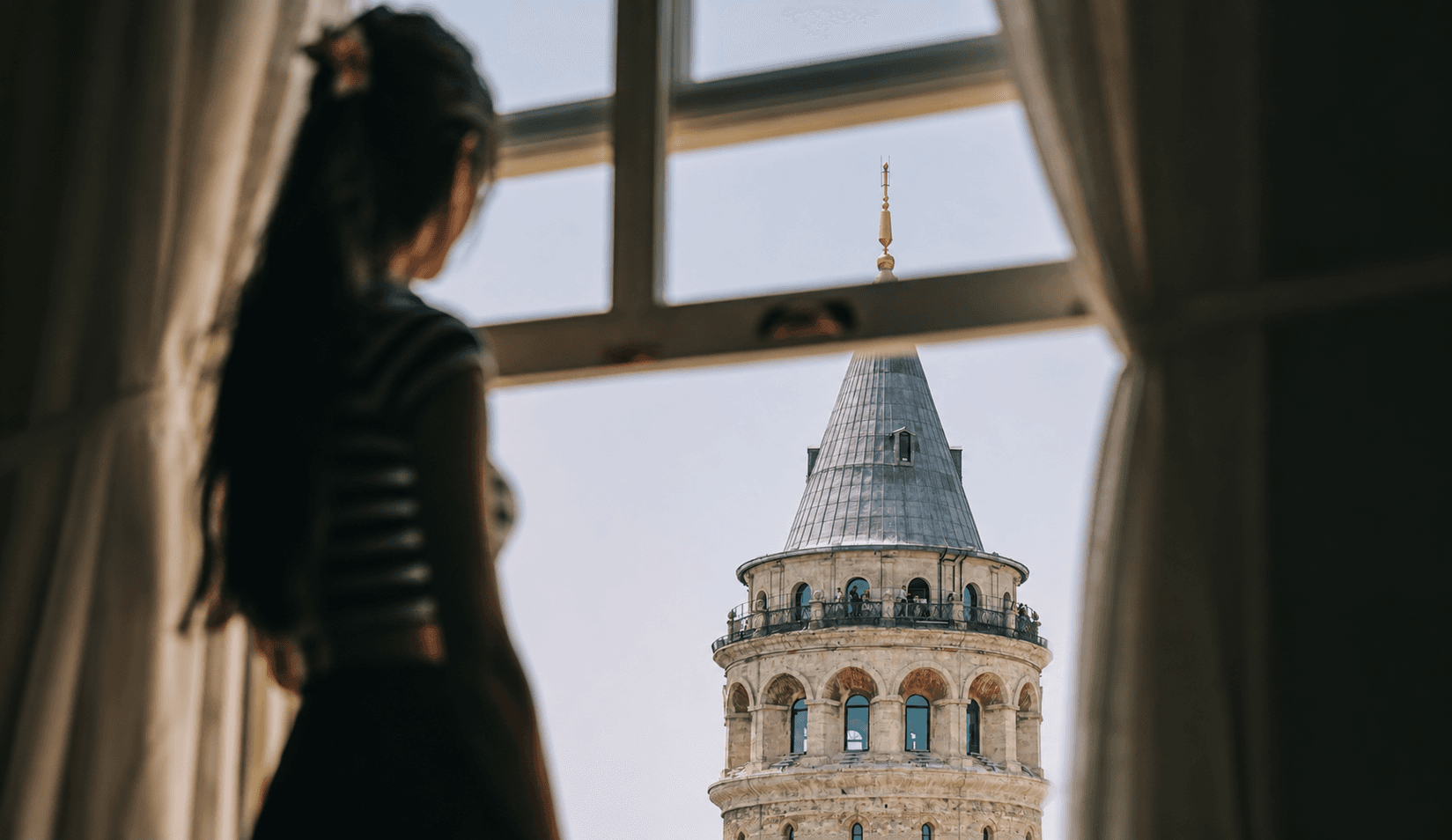
Everyone knows Galata Tower, which we look at every day from our hotel windows — yet most visitors do not know how many different lives this stone cylinder has lived over seven centuries. It was born as a watchtower; it became a prison, an observatory and a fire tower. Here is the story behind the view.
Born as the "Tower of Christ"
The tower was built in 1348–1349 as a watchtower alongside the Genoese walls. The Genoese called it the "Tower of Christ"; over time, however, the tower took the name of the neighbourhood in which it stood. Galata was then a Genoese colony with its own governor — when Istanbul was conquered, the Genoese who handed the keys of the district to Sultan Mehmed the Conqueror retained their special status in return.
Prisoners and stars
During the Ottoman era, the tower’s fate changed continually. In the reign of Süleyman the Magnificent, it was used as a prison for convict labourers working at the Kasımpaşa Shipyard. At the end of the sixteenth century, it began an entirely different life: chief astrologer Takiyüddin Efendi transformed the tower into an observatory. This observatory, from which the stars were watched above Galata, was among the era’s most ambitious scientific undertakings — until it was closed by Murad III. Once the observatory was shut, the tower returned to being a prison. This history was so real that, when the tower was restored for tourism in the 1960s, skulls and human bones were found in its dungeon sections.
The eye that protected the city from fire
Fire was wooden Istanbul’s greatest enemy, and the city stationed a watch at one of its highest points: for centuries, Galata Tower also served as a fire watchtower. The irony is that the tower itself suffered from fires as well — in the fires of 1794 and 1832, much of it was destroyed, then rebuilt each time, eventually receiving the conical roof we know today. In 1875, a storm blew that cone away; the tower stood almost ninety years without it, returning to its present silhouette only with the 1964 restoration. In other words, the Galata Tower our grandparents saw wore a different hat from ours.
A construction site seen from the tower: Barnathan
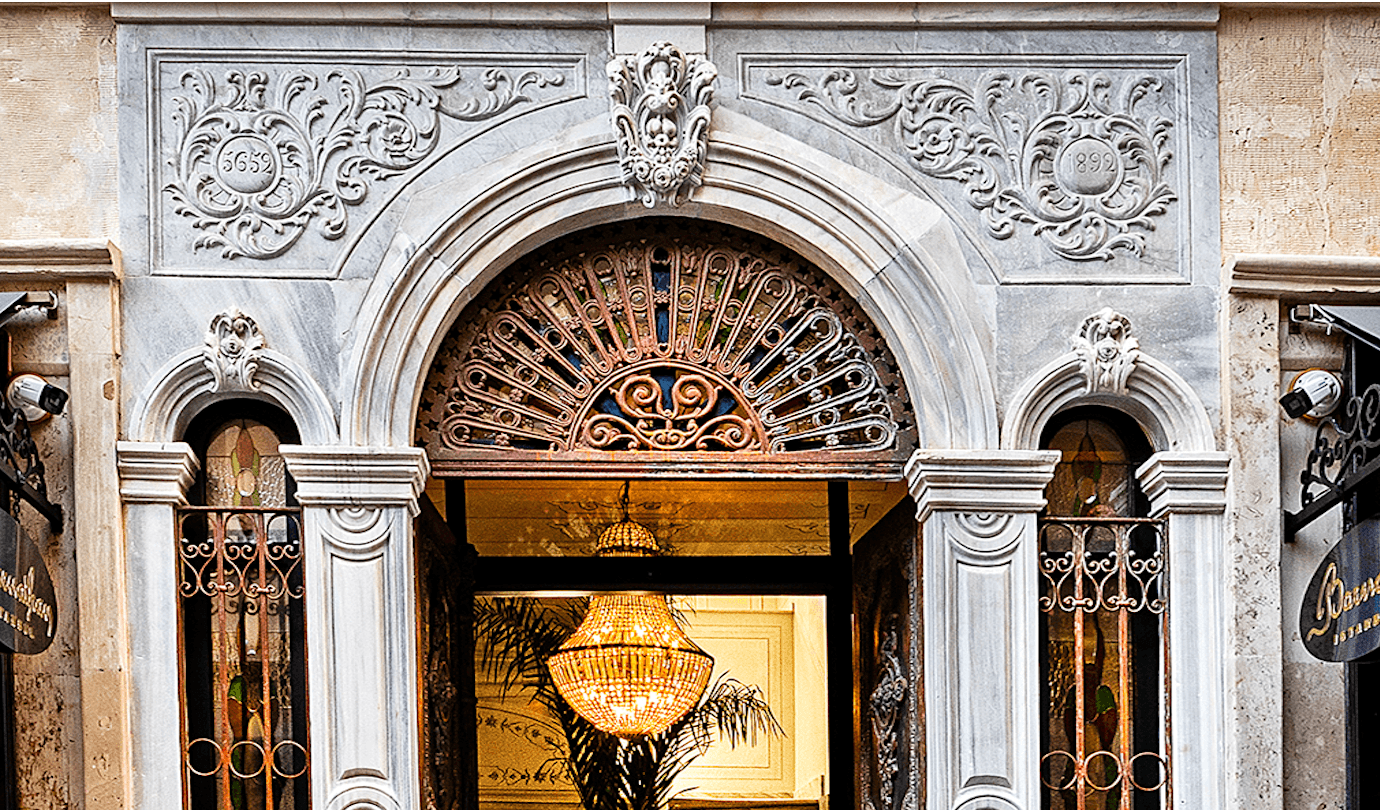
In the 1880s, Sebah & Joaillier, among Istanbul’s most celebrated photographers, captured a panorama from the top of the tower. That image holds a delightful historical coincidence: the completed first section of the Barnathan Apartments and its second section, still under construction, can be seen through the tower’s gaze. The tower and Barnathan have been looking at one another ever since — today, as our guests enjoy breakfast at Barnathan Garden with the tower in view, they are experiencing the latest moment in a 140-year exchange of glances.
Today
The tower is open to visitors today; from its observation floor, the Golden Horn, the Bosphorus and the historic peninsula can all be seen in a single frame. Our suggestion is this: before climbing the tower, or after coming down, take a walk through the surrounding streets. In this neighbourhood, the view is not only above — it continues below, in the dates carved into Barnathan’s stone, in Tünel’s underground journey and in inscriptions seven centuries old.
Source: "Barnathan Apartmanları" (Çiğdem Oğuz, Nar Yatırım, 2016). For a stay with a tower view: Meroddi Barnathan →