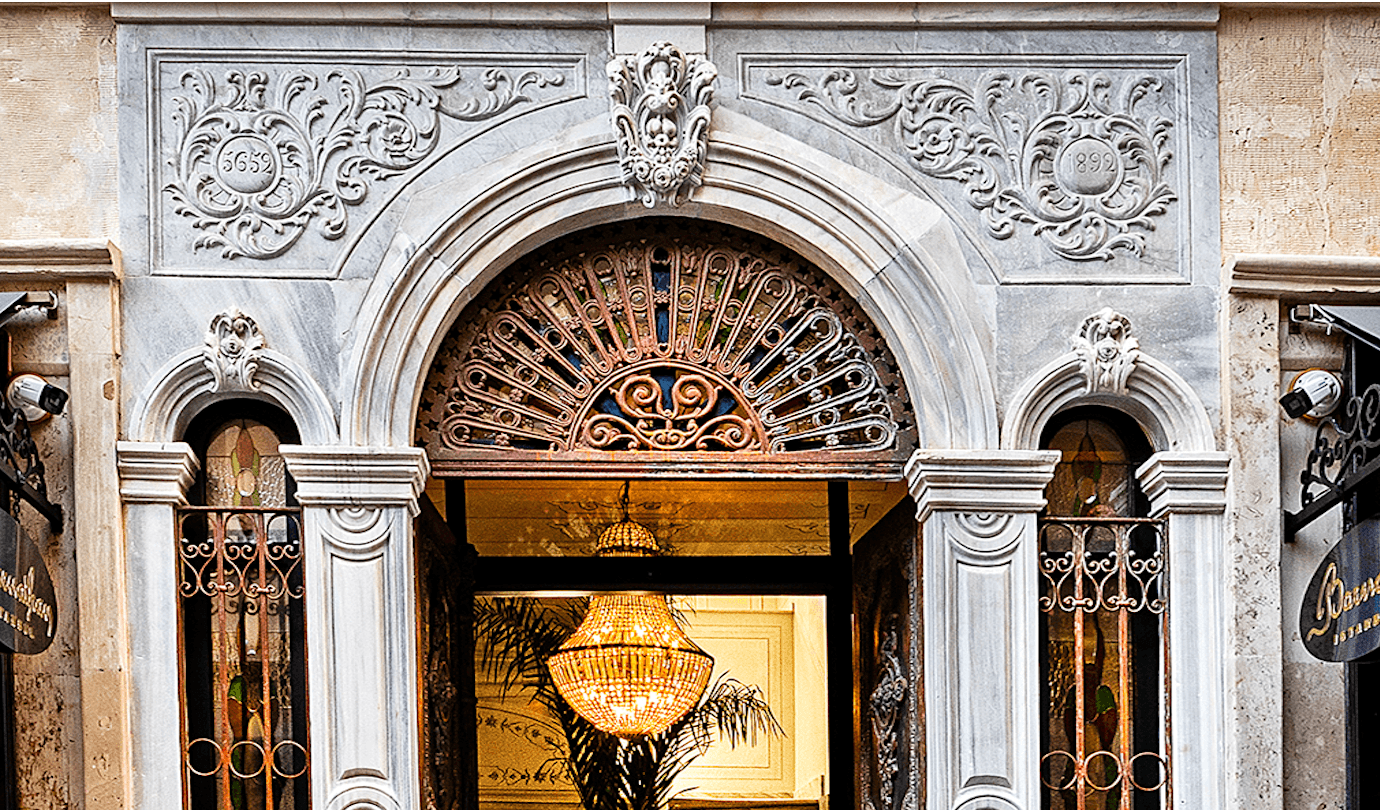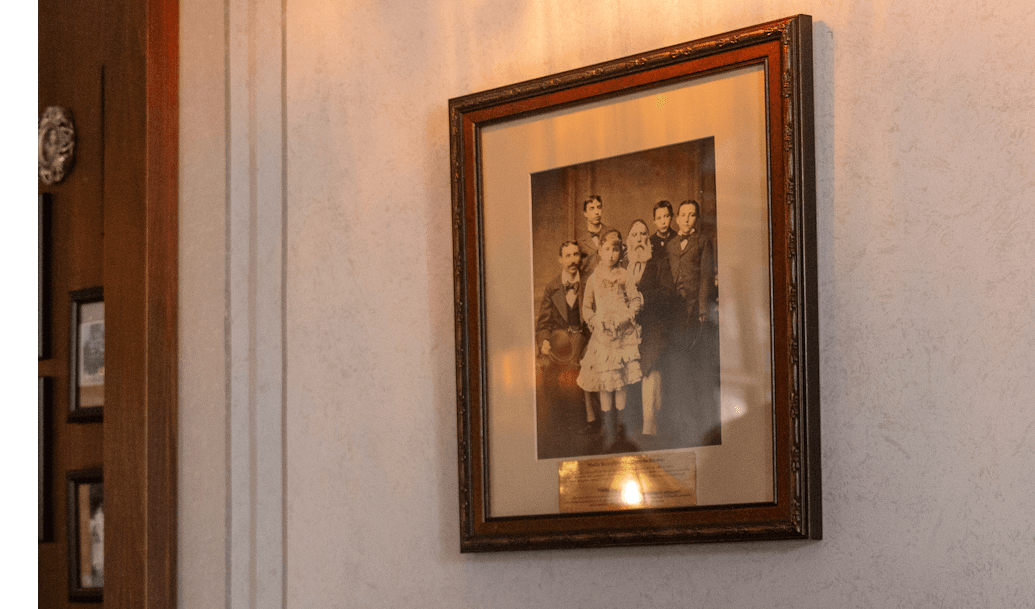
What were the streets where our hotels stand like four hundred years ago? The most delightful witness able to answer this question is Evliya Çelebi, the great traveller of the seventeenth century. The passages he devoted to Galata in his Seyahatname describe the neighbourhood with a vitality we can still recognise today — and, above all, through its food.
A neighbourhood of abundance
According to Evliya Çelebi, the finest fruits and the choicest food and drink are found here; even “bird’s milk,” nourishment for the human body and soul, can be found in Galata. In the language of the period, this is praise for abundance: whatever one seeks, it is there.
When he turns to the bazaars, he becomes even more animated. He writes that in the Confectioners’ Bazaar, katremiz was sold in bottles in thousands of colours, along with musk- and amber-scented sweets fit for a sultan; such delights, he says, could otherwise be found only in Damascus, a city like paradise. Spring halva with patterned leaves, spiced simit, compass clockmakers, and herbalists selling crystal glass and hourglasses — to him, Galata’s bazaar was a showcase of the world.
Four groups of people
The traveller’s most intriguing note is his map of the neighbourhood’s people. He divides the people of Galata into four groups: seafarers, merchants, artisans of every kind, and caulking carpenters. He then names the communities one by one: Greeks, he writes, excelled in tavern-keeping; Armenians in the craft of pastırma; and Jews in commercial brokerage. He lists wealthy captains and even gives one name: Captain Elvan.
This picture is also borne out by archival records. Taken over from the Genoese, Galata remained a port and commercial centre in the Ottoman era; according to the 1455 census, only twenty Turks lived in the area, and neighbourhoods were separated by ethnic origin — yet the streets lined with shops were the exception to this rule: there, everyone lived side by side. In other words, Galata’s commerce had been multicultural from that time onward.
On the same streets centuries later
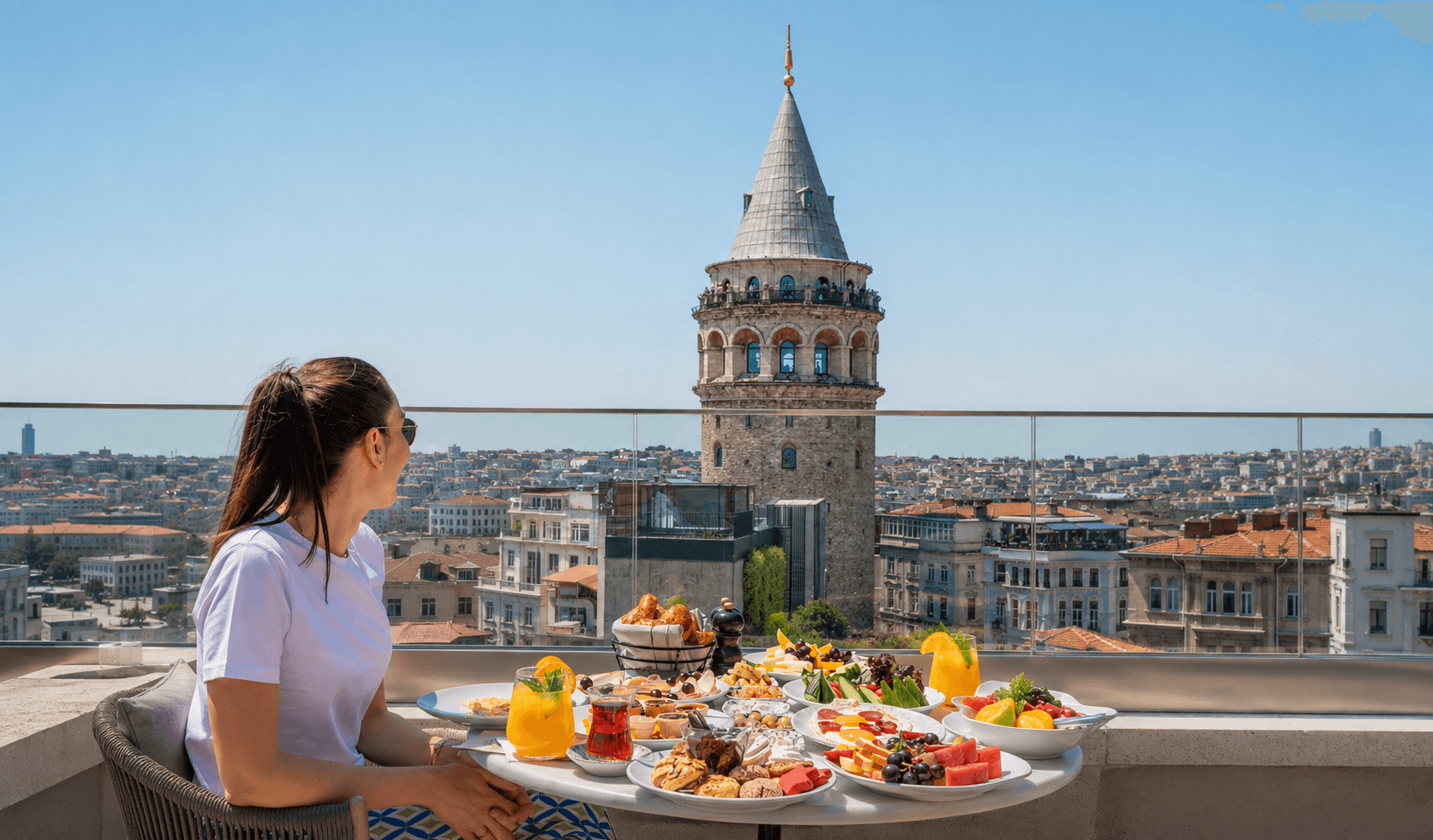
The bazaar Evliya Çelebi described has gone, but the habit remains. Galata is still a neighbourhood of food and drink, small shops and activity that lasts from morning until evening. We carry on this tradition in our own venues: open-buffet breakfast and live music in the evenings in the tower-view garden of Barnathan Garden; an à la carte morning at Barnathan Roof overlooking both the Golden Horn and the Bosphorus; and Lattas’ street-side tables in Serdar-ı Ekrem.
Four hundred years ago, a traveller came here and wrote, “the finest of everything can be found here.” On these same streets, we strive to uphold that same claim — only this time, you are the one taking a seat at the table.
Source: “Barnathan Apartmanları” (Çiğdem Oğuz, Nar Yatırım, 2016). For breakfast and dinner in Galata: Gastronomy →